.png)
.png)
Why Your Backyard Deserves Real Privacy
Most homeowners spend money on outdoor furniture, lighting, and landscaping but still feel uncomfortable sitting in their own yard because anyone walking by or looking from a neighboring window can see everything. A well-planned privacy setup changes that completely. It turns your backyard from a space you tolerate into one you genuinely enjoy every single day.
The best part is that real privacy does not require tearing everything up and starting over. With the right combination of plants, screens, structures, and fencing, you can block unwanted views, define your outdoor space, and create a backyard that feels truly yours.
What Are the Best Backyard Privacy Ideas on a Budget?
The best backyard privacy ideas on a budget combine low upfront cost with results that actually hold up over time. Some solutions deliver instant coverage while others build into a more permanent, polished look. The smartest approach layers both, starting with quick fixes and working toward a solid permanent structure.
Quick Overview of Budget Privacy Solutions
- Wood privacy fences for the most complete, durable, and property-value-adding backyard privacy solution available
- Vinyl privacy fences for a low-maintenance, long-lasting option that never needs painting or staining.
- Lattice fence toppers for adding immediate height and coverage to an existing fence without full replacement
- Bamboo screens for fast, affordable temporary coverage while a permanent fence is being planned
- Climbing plants on fence lines for a natural, green layer that softens any hard fence surface beautifully
Each solution works on its own, but combining a strong permanent fence with softer elements like climbing plants and ornamental grasses creates layered coverage that eliminates prying eyes from every angle and every height.
Using Your Existing Fence as a Privacy Starting Point
If your yard already has an existing fence, you have a solid foundation to build on. Most standard residential fences sit at four to six feet tall, which is often not enough to fully block a neighbor's view from an elevated deck or second-story window. The good news is you do not have to replace the entire structure to get better results.
Easy Ways to Boost an Existing Fence
- Attach cedar or vinyl lattice panels to the top of your fence to gain one to two extra feet of height instantly without full fence replacement
- Secure bamboo screen rolls along the fence face with galvanized wire for a fast interim privacy upgrade
- Add a fence board extension (pressure-treated boards attached vertically above the existing top rail) for a seamless, solid appearance that matches your current fence style
- Install a horizontal privacy topper using composite or cedar boards spaced tightly together above the existing fence line
- Plant climbing vines like clematis or Virginia creeper at the base and train them upward along the fence face for a natural green layer
- Position large planters filled with ornamental grasses directly against the fence base to fill visual gaps at ground level
A Word on Fence Condition
Before adding anything on top of or around an existing fence, it is worth confirming the posts are still solid and the footings are intact. A leaning or deteriorating fence cannot safely support added height, weight, or wind load from extensions. Professional fence contractors assess structural integrity quickly and can reinforce or replace compromised sections before your upgrade investment is wasted on an unstable base.
Backyard Privacy Fence Ideas: Choosing the Right Material
Choosing the right fence material shapes everything from how much privacy you actually get to how long your fence lasts and how much ongoing upkeep it demands. This is the single most important decision in any backyard privacy project, and the wrong choice for your climate or budget often results in replacement costs that eliminate every dollar saved upfront.
Wood Privacy Fence Options
Wood remains the most popular and versatile material for backyard privacy fences. It offers a natural warmth and classic appearance that suits almost every home style, and it can be customized in height, board spacing, and finish to match your specific privacy needs.
Cedar privacy fences are naturally rot-resistant, repel insects without chemical treatment, and take stain and paint exceptionally well. Cedar fences can last 15 to 30 years with sealant applied every two to three years, making them one of the best long-term investments among all wood options.
Pressure-treated pine fences (wood chemically preserved to resist rot, insects, and moisture) are the most widely used and cost-accessible wood option for privacy fencing. They are structurally strong, widely available, and hold up well in most climates for 15 to 20 years with proper maintenance.
Redwood privacy fences offer natural beauty and durability comparable to cedar, with a rich reddish tone that weathers gracefully over time. Redwood is naturally resistant to shrinking and warping, which keeps fence boards tight and gap-free for longer than many other wood species.
Vinyl Privacy Fence Options
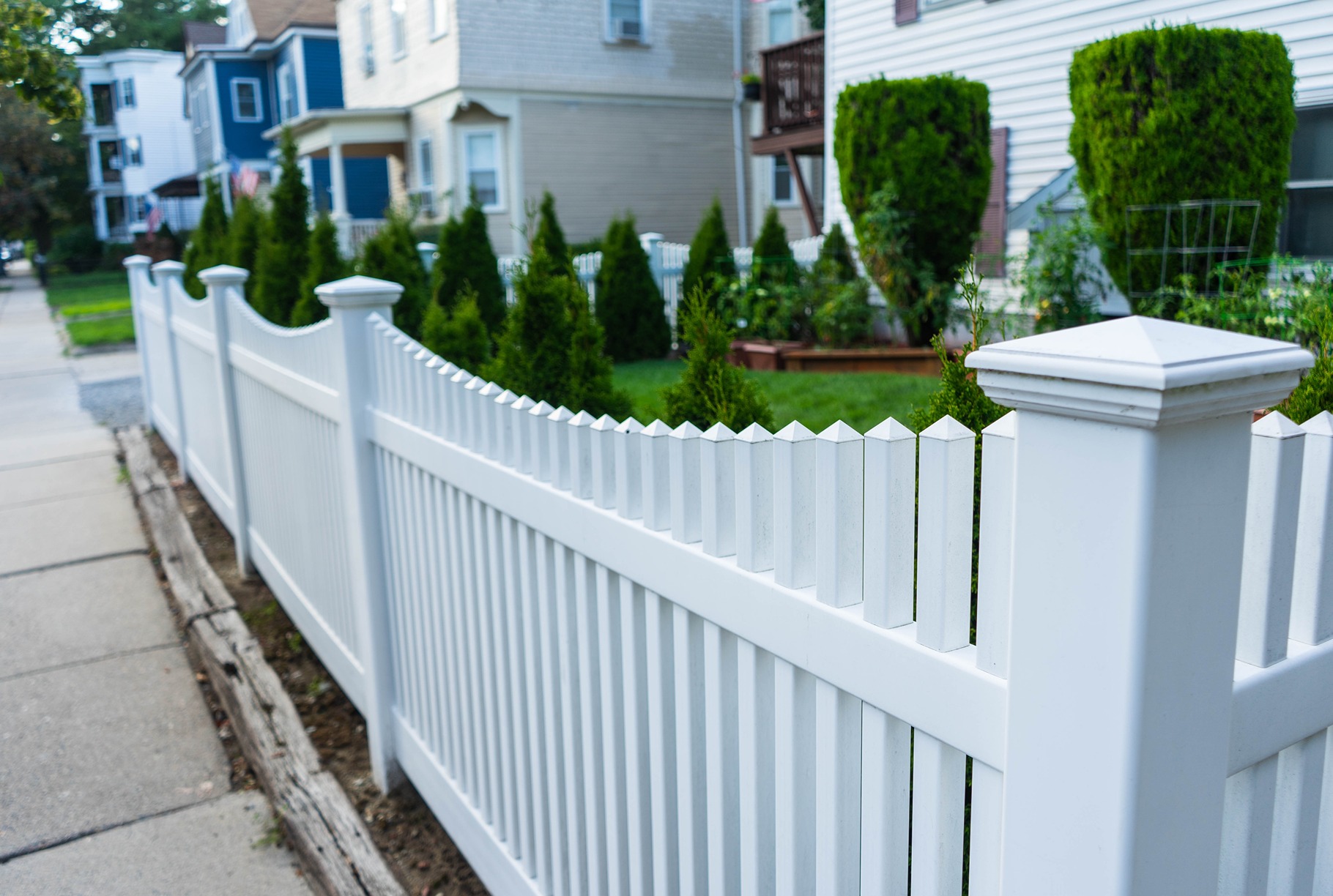
Vinyl (PVC) privacy fencing has grown significantly in popularity because it delivers full, gap-free coverage with almost zero maintenance requirements. It never needs painting, staining, or sealing, and it resists moisture, insects, and UV fading for 20 to 30 years under normal conditions.
Solid vinyl privacy panels are the most common choice, providing complete visual blocking with no gaps between boards. They are available in white, tan, gray, and woodgrain finishes that complement a wide range of home exteriors.
Vinyl shadowbox fences alternate boards on either side of the fence rail, creating a design that provides strong privacy from a direct line of sight while still allowing airflow through the fence. This style suits homeowners who want privacy without the solid wall appearance of a full privacy panel.
Vinyl lattice-top privacy fences combine a solid lower panel with a decorative lattice section on top, adding height and visual interest while supporting climbing plants along the upper section. This style is particularly effective for adding extra privacy above the standard fence height without looking purely utilitarian.
Composite and Other Fence Options
Composite fence boards (manufactured from a blend of recycled wood fiber and plastic) offer the natural appearance of wood with the low-maintenance benefits of vinyl. They resist fading, warping, and moisture effectively and typically carry warranties of 20 to 25 years, making them a strong mid-range option for homeowners who want the look of wood without the upkeep.
Aluminum privacy fences with infill panels provide a sleek, modern alternative for contemporary outdoor spaces. While not as visually warm as wood, aluminum fencing is extremely lightweight, rust-proof, and requires almost no maintenance over its lifespan, similar to chain link fence systems with privacy options.
Privacy Fence Material Comparison
What These Numbers Mean for Your Budget
- Cedar and vinyl deliver the strongest long-term value despite higher upfront costs, particularly when professional installation ensures correct post depth and structural integrity
- Pressure-treated pine offers the most accessible entry point for a permanent wood privacy fence without sacrificing meaningful durability
- Composite is the best option for homeowners who want the visual warmth of wood with genuinely minimal ongoing maintenance
- Bamboo and lattice are best treated as temporary or supplemental solutions rather than primary privacy structures, given their shorter lifespans
💡 Pro Tip: The fence material itself accounts for only part of your total investment. Post depth, concrete footing quality, and rail attachment method determine how long any fence actually lasts regardless of the material chosen. Professional installation ensures these foundational elements are done correctly the first time, which is what separates a fence that lasts 20 years from one that needs significant repairs within five.
Climbing Plants and Living Walls: Natural Privacy That Grows With You
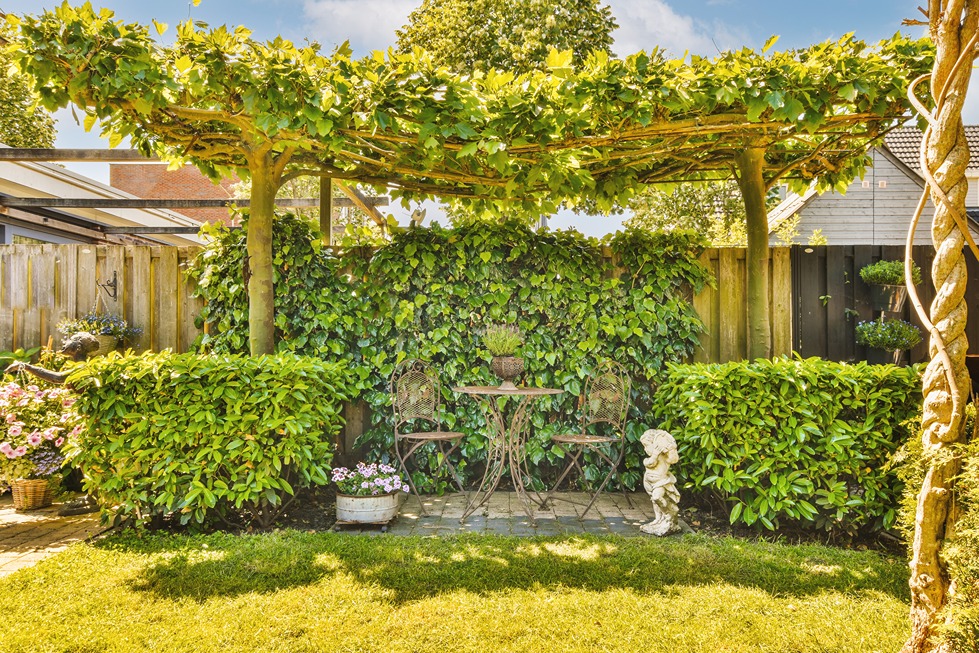
Climbing plants are among the most beautiful and inexpensive backyard privacy ideas available at any budget. They soften hard fence surfaces, add seasonal color and fragrance, and provide increasingly dense coverage with every passing year. Planted along an existing fence or a new professionally installed privacy fence, they create a layered, organic look that no hard structure alone can replicate.
Best Climbing Plants for Backyard Privacy
- Clematis grows quickly, flowers prolifically, and clings naturally to any fence or lattice with minimal training required
- Virginia creeper is extremely fast-growing, reaches 30 to 50 feet at maturity, and turns a brilliant red in autumn for striking seasonal drama
- Jasmine offers fragrant blooms alongside dense foliage that fills in steadily along fence lines and trellis supports
- Morning glory is a fast-growing annual ideal for quick seasonal coverage while slower permanent plants establish
- Climbing roses provide dense, thorny coverage along fence boards and add timeless character to any garden design
What Is a Living Wall?
A living wall is a vertically planted structure, typically wire mesh or modular planting pockets mounted to a frame or fence, designed to grow into a solid surface of foliage. It creates a striking natural screen with almost no ground footprint, making it particularly effective in small gardens and urban backyards where horizontal planting space is limited.
Mistakes That Turn Budget Projects Into Expensive Problems
Even the most creative backyard privacy ideas fall apart when the basics are overlooked. Understanding what goes wrong most often helps you plan smarter and spend more wisely from the start.
Common Mistakes to Avoid
- Planting privacy hedges too close together reduces airflow between plants and creates disease conditions that can wipe out an entire hedge row within a few seasons
- Setting fence posts without adequate depth or concrete leads to leaning and structural failure, particularly in clay soil or regions with significant frost heave
- Choosing plants unsuitable for your climate zone results in poor growth, persistent plant loss, and a privacy screen that never fills in the way you envisioned
- Skipping a structural check on an existing fence before attaching extensions or screens means you may invest in additions that fail because the original structure could not support the added weight
- Screening at only one height level leaves your seating area visible from elevated neighbor decks or second-story windows, which defeats the purpose entirely
- Ignoring local fence height regulations can force costly removal and full reconstruction, completely eliminating any money saved on the original installation
Most of these mistakes are straightforward to prevent with a proper site assessment before any work begins. A professional fence and deck contractor with a clear, step-by-step fence and deck installation process identifies these issues upfront so your investment delivers the privacy you are actually paying for.
Conclusion
Creating a private and inviting backyard doesn’t have to break the bank or require a full landscape overhaul. By combining budget-friendly backyard privacy ideas you can transform your backyard space into a peaceful retreat you’ll love spending time in. Starting with a few simple solutions that fit your timeline and budget allows you to layer in extra coverage as your gardening space matures.
For more permanent and durable options like privacy fences, pergolas, and anchored lattice screens, investing in professional installation is a great idea. Expert contractors ensure your privacy solutions are built to last for decades, providing stability, safety, and a polished finish that DIY projects often can’t match. Reviewing completed fence and deck projects can also help you visualize what might work best in your own yard. Your ideal private backyard is closer and more affordable than you think. Partner with professionals to make your next DIY project a success and enjoy your secluded outdoor oasis sooner.
FAQs
Can I create backyard privacy without building a new fence?
Yes, dense rows of ornamental grasses, large planters with tall shrubs, vertical trellis screens, and living walls all create strong privacy without any fence installation. These options work especially well as standalone solutions for renters or as temporary coverage while a permanent structure is being planned and budgeted.
How do I add more privacy to my existing fence?
Attach lattice panels or bamboo screens to the top of your fence to gain extra height, and plant climbing vines along the fence line for natural layered coverage. Before adding any extensions, check that your existing fence posts and footings are structurally sound enough to handle the added weight and wind load.
Are outdoor curtains practical for year-round use?
Outdoor curtains made from UV-resistant weatherproof fabric perform well through most seasons and are one of the most flexible privacy ideas for patios and deck areas. In regions with harsh winters, removing and storing the panels during the coldest months extends their lifespan considerably.
How do I create privacy in a small garden without making it feel enclosed?
Vertical solutions like trellis screens, wall-mounted lattice panels, and living walls add strong privacy without consuming ground space or reducing the sense of openness in the yard. Combining these with light-colored outdoor curtains and strategic lighting keeps a small garden feeling airy and spacious while still providing a genuinely private retreat.


.png)





.svg)