.png)
.png)
Your dog deserves the freedom to enjoy the backyard, and you deserve the peace of mind that comes with knowing your pup is safe. But when your furry friend has figured out how to clear the fence, that peace of mind disappears fast.
At Optima Fence and Deck, we work with dog owners across Bellevue, WA every day, and one of the most common questions we hear is: what is the best fence for dogs that jump? The short answer is a 6- to 8-foot solid privacy fence in wood or vinyl, with no exterior footholds and a secured base.
But the right fence for your dog depends on more than just height. It depends on your dog's size, behavior, and the layout of your yard.
This guide walks you through the best fence options for dogs that jump, what to add to an existing fence to stop escapes, and how to build a solution that actually works long-term.
Why Dogs Jump Fences and Why the Right Fence Choice Matters

Dogs jump fences for a handful of reasons, and understanding the "why" makes a real difference in choosing the right fence. Reactive dogs often jump toward other dogs, cars, or wildlife they can see on the other side of the fence. Lonely dogs may jump out of boredom or separation anxiety. And some dogs, especially high-drive or working breeds, are simply wired to roam and explore.
What's consistent across most jumpers is this: the visual barrier matters. When a dog can see the squirrel, the neighbor's dog, or the movement on the street, the urge to jump escalates. A solid fence that removes that sightline removes a major trigger.
The stakes are genuinely high. A dog escaping your yard can run into traffic, get lost, get into a confrontation with other dogs, or cause problems with neighbors. Investing in the right dog fence isn't just about containment. It's about your dog's safety and your own peace of mind every time they go outdoors.
What Makes a Fence Truly Dog-Proof?
A dog-proof fence is more than just a tall barrier. Several factors work together to keep even the most determined escape artist contained:
- Height: At least 6 feet for most dogs; 8 feet for large, agile dogs or confirmed jumpers
- No footholds: Smooth vertical slats with no horizontal rails that a dog can use to climb
- Visual barrier: A solid fence removes sightlines and reduces the motivation to jump in the first place
- Bottom security: No gaps at ground level, plus protection against digging
- Sturdy materials: Metal posts, weather-resistant panels, and hardware that holds up to impact and pressure
- A secure fence line: No weak points, warped boards, or gaps along the entire fence line
When these elements align, you have a fence that works with your dog's behavior rather than against it.
The Best Fence Options for Dogs That Jump
Solid Wood Privacy Fence
A solid wood privacy fence is widely considered one of the best fences for dogs that jump, and for good reason. Built to 6 or 8 feet with tight vertical boards flush against each other, it creates a true visual barrier with no footholds. Your dog can’t easily see what’s on the other side, which helps remove one of the biggest triggers for jumping or climbing.
Wood fences are highly durable when properly maintained and give your yard a warm, natural aesthetic. The critical installation detail for dog owners is that the smooth side of the fence must face inward and the fence should have no horizontal rails on the dog's side.
We set all fence posts in concrete to maximize stability and recommend inspecting the fence line seasonally for warped boards or shifting that might create gaps.
The one tradeoff with wood fences is maintenance. Staining, sealing, and occasional board replacement are part of ownership. For many Bellevue homeowners, though, the combination of visual privacy, strength, and curb appeal makes it the right fence for their dog and their yard.
Vinyl Privacy Fence
A vinyl privacy fence delivers all the structural advantages of a wooden fence with far less upkeep. Vinyl is weather-resistant, doesn't rot or warp in Pacific Northwest conditions, and holds its color without needing annual treatment. For dog owners who want a low-maintenance, long-lasting solution, vinyl is an excellent fence choice.
Like wood fences, a vinyl privacy fence provides a solid fence with no visual gaps and no footholds for jumping or climbing. An 8-foot vinyl fence is about as close to a proof fence as you'll find for most dogs. Vinyl also comes in several styles and finishes, so you're not sacrificing curb appeal for safety.
Aluminum Fence
An aluminum fence is highly durable, low maintenance, and built to last. The tradeoff is that aluminum fences feature vertical slats with open spacing between them, which means they don't function as a visual barrier. For reactive dogs that jump toward triggers they can see, this is a real limitation.
That said, a 6-foot aluminum fence works well for many dogs, especially when combined with privacy slat inserts, dense shrubs along the fence line, or a fence extension at the top. Aluminum is a good solution when aesthetics and longevity are priorities alongside containment.
Chain Link Fence
Chain link is one of the most affordable options for the best fencing for dogs, but it’s also one of the least effective choices for dogs that jump. The open diamond weave gives dogs an easy foothold for climbing, and it provides no visual barrier. An escape artist with any athletic ability may treat chain link like a ladder.
That said, if a chain link fence already exists on your property, you have options. Adding an inward-facing fence extension at the top, attaching wire mesh along the lower sections to prevent smaller dogs from squeezing through, and installing a buried L-footer at the base can all make an existing chain link fence more dog-safe without replacing the entire structure.
Wrought Iron Fence
Wrought iron fences are strong fences with serious longevity. They're highly durable, make a bold visual statement, and hold up extremely well over time. The challenge for dog owners is the same as aluminum: open vertical spacing and no visual barrier between your dog and whatever is happening outside the fenced area.
For large dogs that jump rather than climb, a 6-foot wrought iron fence can work as a solid containment option. For small dogs or dogs that test the spacing, adding wire mesh to the lower half of the fence solves the gap problem. Paired with landscaping or privacy additions along the fence line, wrought iron can absolutely be a dog-safe option.
How Tall Should a Fence Be for a Dog That Jumps?
Six feet is the minimum for most dogs. Many breeds that dog owners don't expect to be jumpers, including Labradors, Huskies, German Shepherds, and Border Collies, can clear a 4-foot fence with ease.
For large dogs, athletic breeds, or any dog that has already demonstrated the ability to jump your current fence, go to 8 feet. It's a larger upfront investment, but it's far more cost-effective than dealing with repeated escapes, fence repairs, or having to upgrade your fence a year after installation.
Before installing a new dog fence in Bellevue, WA, check local regulations. Height restrictions vary by zone and property location, and we're always happy to walk homeowners through what's permitted in their neighborhood before we start any project.
What Can You Add to an Existing Fence to Stop Your Dog from Jumping?
A full fence replacement isn't always necessary. There are several effective modifications that can turn a basic fence into a genuinely dog-proof barrier.
Coyote Rollers
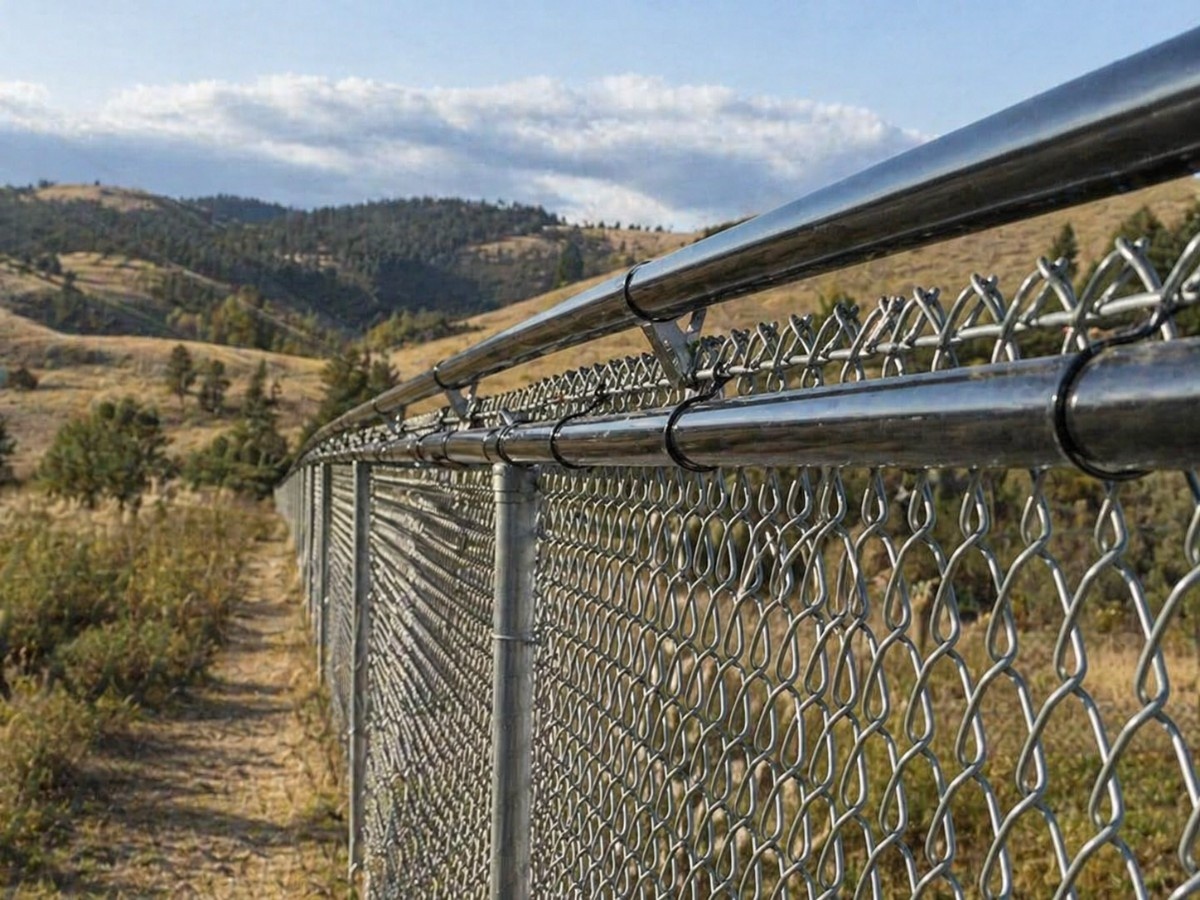
Coyote rollers are rolling PVC or metal cylinders mounted along the top of the fence. When a dog tries to grip the top rail to pull themselves over, the roller spins and removes any foothold. They're a humane, effective addition to wood fences, vinyl fences, and chain link fences alike.
Inward-Facing Fence Extenders
Fence extenders attach to the top of your existing fence and angle inward at roughly 45 degrees, creating a curved overhang that prevents a dog from completing the climb or jump. These are sometimes called Houdini-proof extenders, and the name is well earned. They work across most fence types and don't require tearing out your current fence to install.
Wire Mesh and Hog Wire Panels
For sections of the fence that need reinforcement, wire mesh or cattle panels add a strong, durable layer of security. These work well when attached to the lower portion of an existing fence to close off gaps, or along the entire fence line to add structural strength for large dogs that push or lean into fencing.
How to Stop a Dog from Digging Under the Fence
Some dogs are jumpers and diggers, which means your fence strategy needs to address both. Height gets them from above; bottom security gets them from below. Here are the most effective approaches:
- L-footer: A section of wire mesh bent at a 90-degree angle and buried horizontally along the base of the fence. When a dog digs down, they hit the mesh and stop.
- Buried wire mesh: Running hardware cloth or welded wire a foot into the ground along the entire fence line
- Large rocks: Placing large rocks or pavers along the base of the fence discourages digging and eliminates easy soft ground access
- Concrete footer: For permanent, heavy-duty containment, a poured concrete footer along the base of the fence line eliminates digging entirely
Combining jump-proofing at the top with dig-proofing at the bottom covers every possible escape route.
Best Fence for Small Dogs vs. Large Dogs
The best fence for your dog depends heavily on the type of dog you have. Small dogs and large dogs have different containment needs, and the fence that works for one may completely fail for the other.
For small dogs, prioritize:
- Tight spacing between vertical slats or a solid surface with no gaps
- Fence height of at least 4 to 5 feet (some small breeds can jump surprisingly high)
- Mesh or solid panels along the bottom to prevent squeezing through or under
For large dogs, prioritize:
- Fence height of 6 to 8 feet minimum
- No horizontal rails or footholds of any kind
- Heavy-duty materials that can withstand impact and repeated pressure
- Strong fence posts set deep in concrete
- Bottom security against digging
A picket fence might suit a calm, small dog, but it's rarely the right fence for an active larger breed. Matching the fence to the dog's actual size and behavior is the single most important step in the decision-making process.
Should You Consider an Invisible Fence?
An invisible fence uses a buried wire boundary and a receiver collar to signal your dog when they approach the perimeter. For some dogs in some situations, it works well. But it has real limitations that dog owners need to understand before relying on it.
An invisible fence provides no physical barrier. It keeps nothing out of your yard, and for highly motivated dogs, the correction from the collar often doesn't override the drive to chase or escape. Reactive dogs, in particular, may blow through the boundary when triggered.
An invisible fence can work as a supplement to a physical fence, adding an extra layer of deterrence for a particularly persistent escape artist. But for most dogs that jump or climb, a solid physical fence is the more reliable, more comprehensive solution.
Key Takeaways for Choosing the Best Dog Fence
- Go tall: 6 feet minimum; 8 feet for large, athletic, or confirmed jumpers
- Remove footholds: Vertical slats, smooth surfaces, no horizontal rails on the dog's side
- Block the view: A solid fence eliminates the visual triggers that cause reactive dogs to jump
- Secure the bottom: L-footers, buried mesh, or concrete stop diggers in their tracks
- Match fence to dog: Factor in size, behavior, and breed tendencies
- Think long-term: Durable, weather-resistant materials save money and frustration over time
- Check local regulations: Bellevue, WA has specific rules on fence height and placement by zone
Ready to Build the Right Fence for Your Dog?
At Optima Fence and Deck, we've helped hundreds of homeowners across Bellevue, WA stop worrying and start enjoying their backyards again. Whether you need a brand-new dog fence designed from the ground up or want to upgrade an existing fence to keep your escape artist where they belong, we'll help you find the right fence for your dog, your yard, and your budget.
We handle the design, the installation, and the details, so you don't have to. Your pup deserves a safe outdoor space, and you deserve to stop counting fence boards every time they go outside.
Contact Optima Fence and Deck today for a free estimate. Let's build a fence your dog can't beat.
FAQs
What is the best fence for dogs that jump?
The best fence for dogs is a solid wood or vinyl privacy fence at least 6 feet tall, ideally 8 feet for large or highly athletic breeds. These fences provide no footholds, no visual triggers through the fence, and a sturdy barrier that most dogs cannot overcome. For added security, install coyote rollers or inward-facing fence extenders along the top of the fence.
What can I put on my fence to stop a dog from jumping?
Several additions can stop a dog from jumping your existing fence. Coyote rollers (spinning PVC or metal cylinders mounted along the top rail) remove the foothold a dog needs to pull itself over. Inward-angled fence extenders, sometimes called Houdini-proof extenders, curve the top of the fence inward so a dog cannot complete a climb. Both options work on wood, vinyl, and chain link fences without requiring a full fence replacement.
How tall should a fence be for a dog that jumps?
A fence for a dog that jumps should be at least 6 feet tall. Many active breeds, including Huskies, German Shepherds, Belgian Malinois, and Labradors, can clear a 4-foot fence with minimal effort. For larger breeds or confirmed escape artists, an 8-foot fence is the more reliable choice. Always verify local height regulations before installing a new fence, as rules vary by municipality and zoning area.
What type of fence is best for large dogs?
The best fence for large dogs is a solid wood or vinyl privacy fence standing 6 to 8 feet tall with no horizontal rails on the interior side. Large dogs need a fence that can withstand physical pressure and impact, so heavy-duty posts set in concrete and durable panel materials matter. Chain link fences are generally not recommended for large, active dogs because the open weave provides easy footholds for climbing.
Can a dog escape through a chain link fence?
Yes. Chain link fences are one of the easiest fence types for dogs to escape through or over. The open diamond pattern gives dogs clear footholds for climbing, and there is no visual barrier to reduce the urge to escape. Smaller dogs may also squeeze through the links or dig under with relative ease. If you have a chain link fence, adding inward-facing extensions at the top and a buried L-footer at the base significantly improves containment.
What is the best way to stop a dog from digging under a fence?
The most effective way to stop a dog from digging under a fence is to install an L-footer, a section of wire mesh bent at 90 degrees and buried horizontally along the base of the fence. When a dog digs down and hits the mesh, they stop. Other effective options include running buried hardware cloth along the fence line, placing large rocks along the base, or pouring a concrete footer for permanent protection. Combining bottom security with a tall, solid fence addresses both jumping and digging.
Is an invisible fence a good option for dogs that jump?
An invisible fence can work for some dogs but has significant limitations for jumpers. It creates no physical barrier, which means other animals can enter your yard and a highly motivated dog may push through the correction to escape. Reactive dogs in particular often override invisible fence boundaries when triggered by other dogs or wildlife. For most dogs that jump, a physical fence is the more reliable solution. An invisible fence works best as a supplement to a physical fence rather than a standalone containment method.
What is the most dog-proof fence material?
Vinyl and solid wood are generally the most dog-proof fence materials. Both create a solid, smooth barrier with no footholds and no visual gaps, which addresses the two primary reasons dogs jump: physical ability and visual triggers. Vinyl requires less maintenance than wood and holds up well in wet climates. For maximum durability and containment, choose a 6- to 8-foot solid vinyl privacy fence with metal posts set in concrete and a secured base to prevent digging.


.png)







.svg)