.png)
.png)
Living near a busy road in Bellevue means your backyard can feel less like a retreat and more like an extension of the street. The steady hum of passing cars, the bass of heavy trucks, and the general noise pollution that carries through your yard can make it hard to enjoy your outdoor space. The right fence, though, can genuinely change that.
At Optima Fence and Deck, we've helped Bellevue homeowners take back their yards from unwanted noise. The short answer to the question most people are asking: install a solid, dense fence that's at least 6 to 8 feet tall, sealed at the ground, and positioned closer to the road than to your house.
The longer answer involves choosing the right materials, eliminating every gap, and pairing your fence with smart landscaping. This guide covers all of it.
Why Road Noise in Your Backyard Is Worth Taking Seriously

Sound waves don't travel in a straight line. They bend around corners, bounce off hard surfaces, and scatter in different directions, which is why traffic noise seems to wrap around you rather than come from one clear noise source.
Sound also travels through the ground and through the air simultaneously, which is why a fence with even a small gap can let in more sound than you might expect.
Prolonged exposure to elevated noise levels isn't just annoying; it affects sleep quality, concentration, and overall wellbeing. For homeowners in high-traffic neighborhoods, reducing ambient noise in the backyard isn't a luxury. It's a genuine quality-of-life improvement.
That's exactly why a properly designed sound barrier fence is one of the most worthwhile investments you can make in your property.
Can You Block Road Noise with a Fence?
Yes, and the results can be meaningful. A well-built fence won't create complete silence, but it can reduce traffic noise by 5 to 10 decibels, which translates to a noticeably quieter yard. Specialized acoustic fences go even further, with some designs capable of blocking up to 28 decibels.
One helpful metric to understand is the STC rating, which stands for Sound Transmission Class. This number measures how well a barrier reduces airborne sound. The higher the STC rating, the more effective the material is at blocking noise. Dense materials like masonry walls score among the highest, while thin or gapped materials score near the bottom.
The variables that determine your fence's noise reduction performance come down to four things: height, material density, the absence of gaps, and placement relative to the noise source. Get all four right, and the difference in your backyard will be substantial.
What Makes a Fence Effective for Noise Reduction?
Before comparing materials, it helps to understand the core principles that make any fence work well as a sound barrier.
Height
A fence must be tall enough to break the direct line of sight between you and the road. For most residential properties near a busy street, that means at least 6 to 8 feet. Sound waves bend over the top of a fence that's too short and continue spreading toward your home.
The taller the fence, the more effectively it intercepts those waves before they reach your seating area.
No Gaps
Sound travels through air, and any opening in your fence, especially gaps underneath at ground level, will significantly reduce its effectiveness as a noise barrier. Even a narrow gap at the base of the fence is enough to let sound pour through and spread across the yard.
A properly installed fence should sit flush with the ground, with no openings between panels or below the bottom rail.
Mass and Density
The heavier and denser the fence material, the harder it is for sound waves to pass through. This is why solid concrete walls outperform every other option. Lightweight or open materials, like chain-link or spaced-slat designs, allow sound to move through freely and offer almost no noise control benefit.
Fence Placement
Most homeowners instinctively want to install a fence as close to their house as possible. For noise reduction, though, the opposite approach works better. Positioning your fence closer to the road, and closer to the noise source, limits how far sound waves can spread after being deflected.
Moving the fence even a few feet toward the street can produce a measurable improvement in the noise levels you experience at your patio or garden.
The Best Fence Materials for Noise Reduction
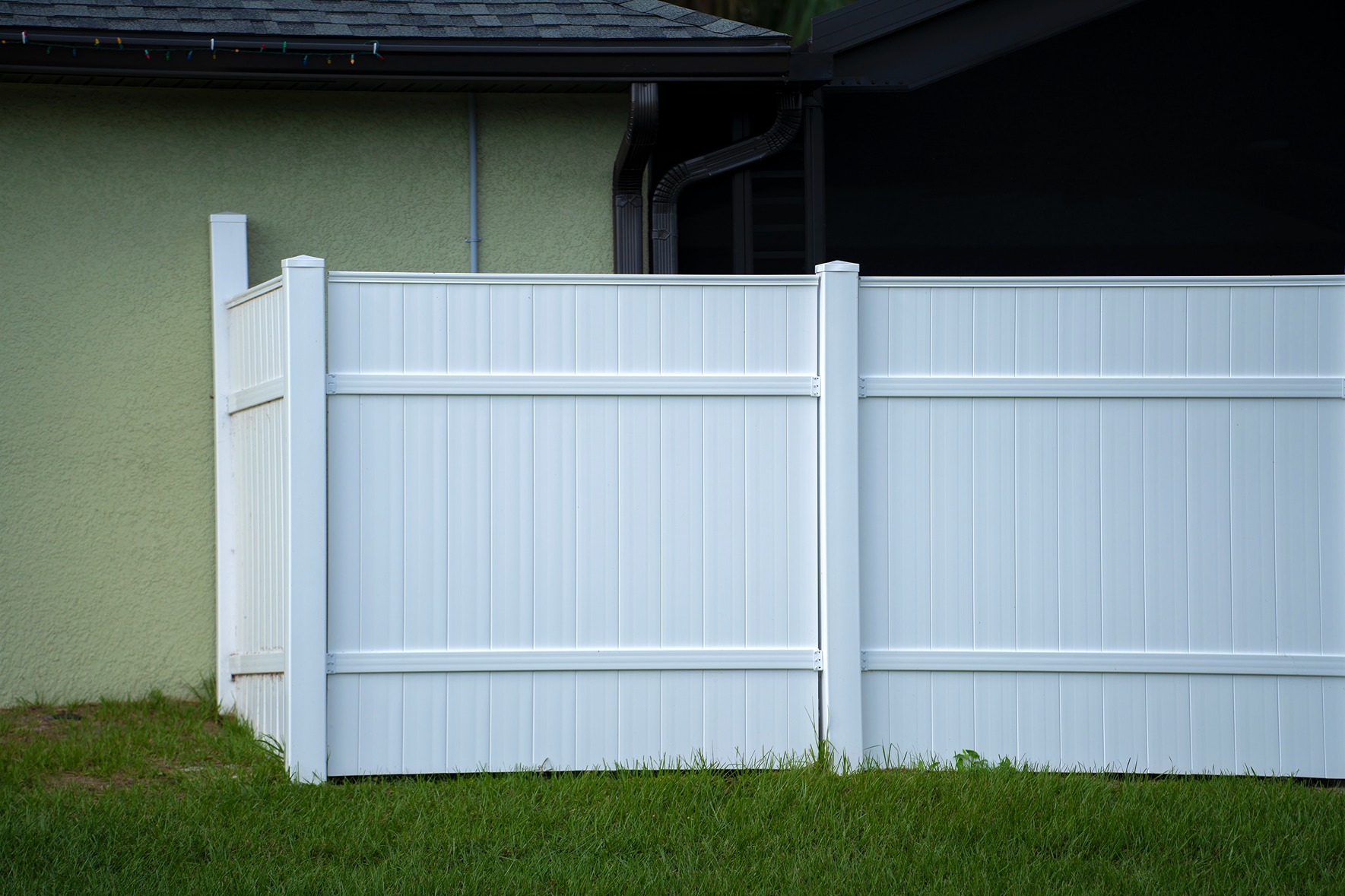
When homeowners ask us about the best fence for noise reduction, these are the materials we consistently recommend.
1. Masonry and Concrete Walls
Solid concrete, stone, brick, and gabion walls are the top performers for sound absorption and blocking. Their sheer mass means sound waves simply cannot penetrate them to any meaningful degree.
For homeowners dealing with severe traffic noise who want the most effective long-term solution, masonry is the clear answer. The trade-off is cost and installation complexity, both of which are higher than other options.
2. Solid Panel Vinyl Fences
Vinyl fences with solid, gapless panels are among the most popular choices for Bellevue homeowners who want effective noise reduction without the cost of masonry. Dense vinyl panels prevent sound from passing through and hold up exceptionally well in the Pacific Northwest's wet climate.
They're also low-maintenance, which matters for households that don't want to spend weekends refinishing or repainting. When it comes to the best fence to block road noise at a realistic price point, solid vinyl is typically our first recommendation.
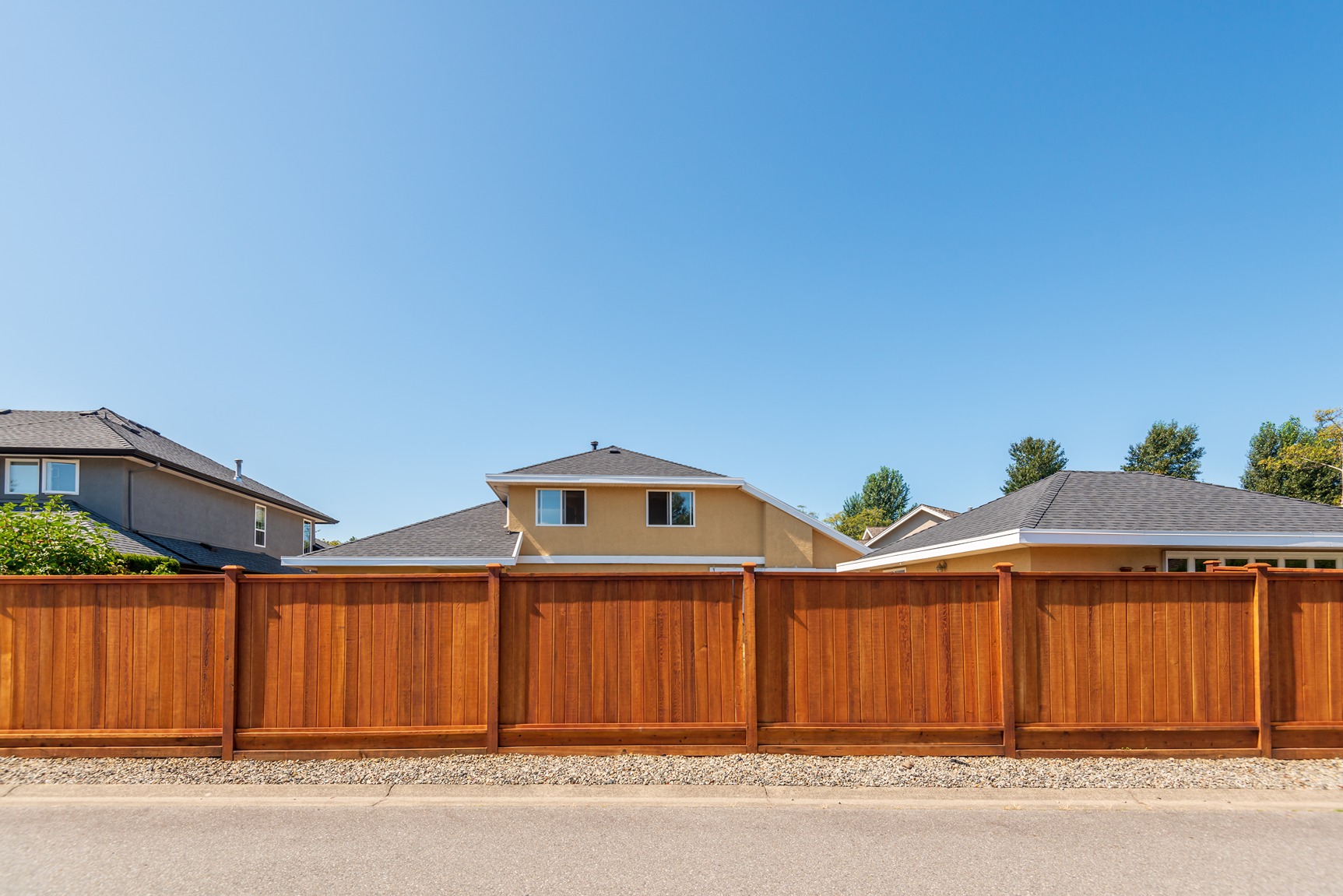
3. Double-Layered Wood Fences
A wood fence built with tongue-and-groove boards or a double-stockade design creates significant mass through staggered, overlapping construction. This approach eliminates the gaps that standard board-on-board fences often leave between panels, and the added thickness gives the fence genuine blocking power.
Thick cedar or redwood boards combine natural warmth with solid acoustic performance, making them a beautiful and functional choice for yards where aesthetics matter as much as noise control.
4. Acoustic and Soundproof Fences
Engineered soundproof fences combine a solid outer shell with interior sound-absorbing panels designed to absorb sound waves rather than just reflect them. These systems often use layered composite materials that dampen vibration as well as airborne sound.
They carry a higher price point than standard wood or vinyl, but for homeowners dealing with significant noise pollution near a freeway or arterial road, they offer the most targeted results available in residential fencing.
How to Maximize Your Sound Barrier Fence
Choosing the right material is only part of the solution. Here are the strategies we recommend to get the most out of any fence for noise reduction.
Seal Every Gap
After installation, walk the full length of your fence and inspect for any gaps, particularly at the base where the fence meets the ground. Use heavy-duty acoustic sealant or a rubber fence wrap to close any openings. This single step can make a surprisingly large difference in overall performance.
Add Mass to an Existing Fence
If you already have a fence and want to improve its sound blocking without replacing it entirely, consider attaching Mass Loaded Vinyl, commonly called MLV, to the panel surfaces. MLV is a dense, flexible material that adds significant blocking power to an existing structure. It's not the most attractive option on its own, but it can be paired with plantings or a decorative overlay to improve the look.
Combine Your Fence with Landscaping
One of the most effective strategies we recommend is pairing a solid fence with strategic landscaping. Planting evergreen trees or dense shrubs in front of your fence creates a living wall that absorbs and scatters sound waves before they reach the barrier.
Plants don't block noise the way a solid fence does, but they add meaningful sound absorption and prevent sound waves from bouncing back toward the road and reflecting into neighboring properties.
Water features like garden fountains or small ponds placed near your seating area serve a different but complementary purpose: they introduce desirable sounds that help mask the unwanted sounds from traffic. White noise has the same effect. The goal is to shift the sonic environment of your yard so that the road fades into the background.
Fence Ideas for Your Backyard That Also Reduce Noise
When exploring fence ideas for backyard spaces, many homeowners are surprised to discover that the most visually appealing options also tend to be among the most effective for noise reduction.
Tall, solid privacy fences built with cedar boards, tongue-and-groove vinyl panels, or layered composite materials look clean and intentional while simultaneously acting as physical barriers against traffic noise.
A layered approach works especially well in Bellevue's residential neighborhoods. A solid fence along the property boundary closest to the road, with a row of evergreen trees or dense shrubs planted alongside it, creates a quiet zone within your yard that feels like a natural green enclosure rather than a barrier wall. The plants soften the look of the fence while adding genuine acoustic benefit.
What About Loud Neighbors?
Road noise isn't the only challenge Bellevue homeowners face. Loud neighbors, nearby construction, and general neighborhood activity all contribute to the overall noise levels in a yard.
The same principles that work for traffic noise apply here too. A solid, dense backyard fence positioned between your yard and the source of the sound will reduce noise coming from any direction.
In multi-source noise environments, where sound comes from more than one angle, a combination approach is most effective. Solid fencing on the sides facing the primary noise sources, combined with landscaping on other sides to absorb ambient noise, gives you the broadest coverage.
What Is the Best Sound Barrier for Road Noise?
This is one of the most common questions we hear, and the honest answer is that it depends on your property, your budget, and the intensity of the noise you're dealing with.
For maximum performance, a masonry wall delivers the highest STC rating of any residential barrier. For a balance of effectiveness, curb appeal, and cost, solid vinyl or double-layered wood are outstanding choices.
When researching the best fence for road noise for your specific yard, the most important step is a proper site assessment. Where is the noise coming from? How tall does the fence need to be to break the line of sight to the road? Are there existing gaps or structures affecting sound travel?
These questions matter far more than any general material comparison.
How Optima Fence and Deck Helps Bellevue Homeowners
At Optima Fence and Deck, we specialize in helping Bellevue homeowners find the right fencing solution for their property, goals, and budget. We know that noise reduction is about more than just blocking sound; it's about creating a backyard where you actually want to spend time.
Whether you're considering solid vinyl panels, a double-layered cedar build, or a custom acoustic solution, we'll help you choose the right fence material, plan for proper fence placement, and install it with the level of care that makes all the difference.
We pay attention to the details that matter most for performance: sealing gaps at ground level, ensuring panels sit flush, and positioning the fence for maximum effectiveness relative to your noise source.
Ready to Create a Quieter Backyard?
Knowing how to block road noise in backyard spaces is the first step; having a trusted team to build a fence that actually delivers is what gets you there. At Optima Fence and Deck, we're ready to help you make it happen.
Contact us today for a free consultation. We'll assess your property, discuss your noise reduction goals, and recommend the best fencing solution to help you enjoy your outdoor space the way it was meant to be enjoyed. Serving Bellevue and the surrounding area, we're here whenever you're ready to get started.
FAQs
1. Can you block road noise with a fence?
Yes, a solid fence can meaningfully reduce road noise in your backyard. A dense, gapless fence that's 6 to 8 feet tall and positioned close to the noise source can lower traffic noise by 5 to 10 decibels. Specialized acoustic fences can block up to 28 decibels. The key factors are material density, height, and the complete elimination of gaps at the base.
2. How do you decrease road noise in your backyard?
To reduce road noise in your backyard, install a solid, dense fence at least 6 to 8 feet tall with no gaps at ground level, placed as close to the road as your property allows. Pair it with dense evergreen shrubs or trees in front of the fence to absorb sound waves, and consider adding water features near your seating area to mask remaining ambient noise.
3. What type of fence is best for noise reduction?
The most effective fence types for noise reduction are masonry or concrete walls (highest STC rating), solid panel vinyl fences, double-layered or tongue-and-groove wood fences, and specially engineered acoustic fences with sound-absorbing panels. All of these materials share the key properties that matter for noise control: high density, no gaps, and solid panel construction.
4. What is the best sound barrier for road noise?
A solid masonry or concrete wall delivers the highest noise reduction for road traffic. For residential properties, solid panel vinyl or double-layered wood fences offer an effective and more affordable alternative. Whichever material you choose, the fence must be at least 6 to 8 feet tall, free of gaps at the base, and positioned closer to the road than to your house for maximum effectiveness.
5. How tall does a fence need to be to block noise?
A fence needs to be at least 6 to 8 feet tall to effectively block road noise. The fence must break the direct line of sight between your yard and the traffic source. Below this height, sound waves bend over the top of the fence and continue traveling toward your home. For properties close to a busy road or highway, taller fences of 8 feet or more provide even better performance.
6. Does a wood fence help with noise reduction?
Yes, a wood fence can reduce noise, but the construction method matters significantly. A standard spaced-picket wood fence offers minimal noise reduction because sound passes through the gaps. A solid tongue-and-groove or double-stockade wood fence, built with thick overlapping boards and no gaps, creates enough mass to meaningfully reduce traffic noise and qualify as a genuine sound barrier fence.
7. Will adding Mass Loaded Vinyl to my fence reduce road noise?
Yes, attaching Mass Loaded Vinyl (MLV) to an existing fence can improve its noise reduction performance. MLV is a dense, flexible material that adds mass to fence panels, making it harder for sound waves to pass through. It's a practical upgrade for homeowners who want to improve their current fence's acoustic performance without replacing it entirely. Pairing MLV with gap sealing at the base maximizes results.
8. Does vinyl fencing reduce road noise?
Solid panel vinyl fencing is one of the most effective residential fence options for noise reduction. Dense, gapless vinyl panels prevent sound from passing through and are particularly well-suited to climates with heavy rainfall, such as the Pacific Northwest, because they resist warping and moisture damage over time. For best results, choose a solid panel design with no gaps and install the fence flush to the ground.


.png)







.svg)