.png)
.png)
Defining This Ranch Rail Style
A vinyl ranch rail fence isn't for privacy. It's for defining borders, framing open views, and giving large or rural properties a structured boundary without blocking the landscape. Think horizontal rails connecting evenly spaced posts, with no pickets or solid panels involved.
This style traces back to traditional farm fence and horse fence designs, where post and rail construction let ranchers see across pastures while still marking clear property lines. A vinyl ranch rail fence Seattle area homeowners install today takes that same open, functional look and builds it in low maintenance vinyl instead of wood.
What Does This Ranch Rail Style Typically Cost?
Cost is usually the next question once homeowners settle on style and rail count. Vinyl fencing typically costs between $20 to $40 per linear foot, though installation costs can vary based on terrain and materials used.
Rail count affects price directly. A basic 2 rail vinyl fence generally sits toward the lower end of that range, since it uses less material per post span. A 4 rail vinyl fence or 5 rail configuration costs more, both in materials and in the added labor of installing extra rails across long fence lines.
Terrain plays a role too. A vinyl ranch rail fence Seattle area installer typically prices a flat, open lot in Snohomish County faster and at lower cost than a sloped or uneven property, where posts may need extra adjustment to keep the rail lines level and consistent. Gate posts and corner posts also add a bit more labor than a straight run of fence, since they carry more structural load.
💡 Pro Tip: Ask for an itemized quote that separates material costs from labor. This makes it much easier to see exactly where your ranch fencing ideas fit your actual budget before work begins.
How Many Rails Do You Actually Need?
So how many rails does a ranch rail vinyl fence actually need? It depends on what you're containing and how strong a visual boundary you want. Vinyl ranch fencing comes in 2, 3, 4, or 5 rail options, and each step up changes both the look and the function.
A 2 rail vinyl fence, often finished as a 2 rail white vinyl fence, works well as a simple property line marker or front yard accent. A 3 rail vinyl fence is the most popular middle ground, offering a classic ranch look with a bit more visual weight.
A 4 rail vinyl fence steps up the containment strength, with four or five rails forming a stronger boundary for livestock areas. For serious horse or large-animal containment, vinyl rail is often paired with mesh or a flexible-rail system, since hollow vinyl can crack on hard impact instead of flexing like purpose-built horse fence.
Use two to five rails based on your actual safety needs rather than looks alone, since a decorative front yard border rarely needs the same rail count as a pasture holding livestock.
Rail Count Comparison at a Glance
Here's a quick reference for matching rail count to your project.
Color Options and Style Variations
Beyond rail count, color is the other major decision homeowners weigh when browsing ranch fence ideas. Many vinyl fences come in colors such as white, beige, and gray, giving you room to match the fence to your home's exterior or simply let it blend into the landscape.
Classic white remains the most requested option among ranch style fence ideas, especially for front yard borders and properties with a traditional look. A white vinyl split rail fence reads as clean and timeless against green pasture or lawn, which is part of why it has stayed popular for decades.
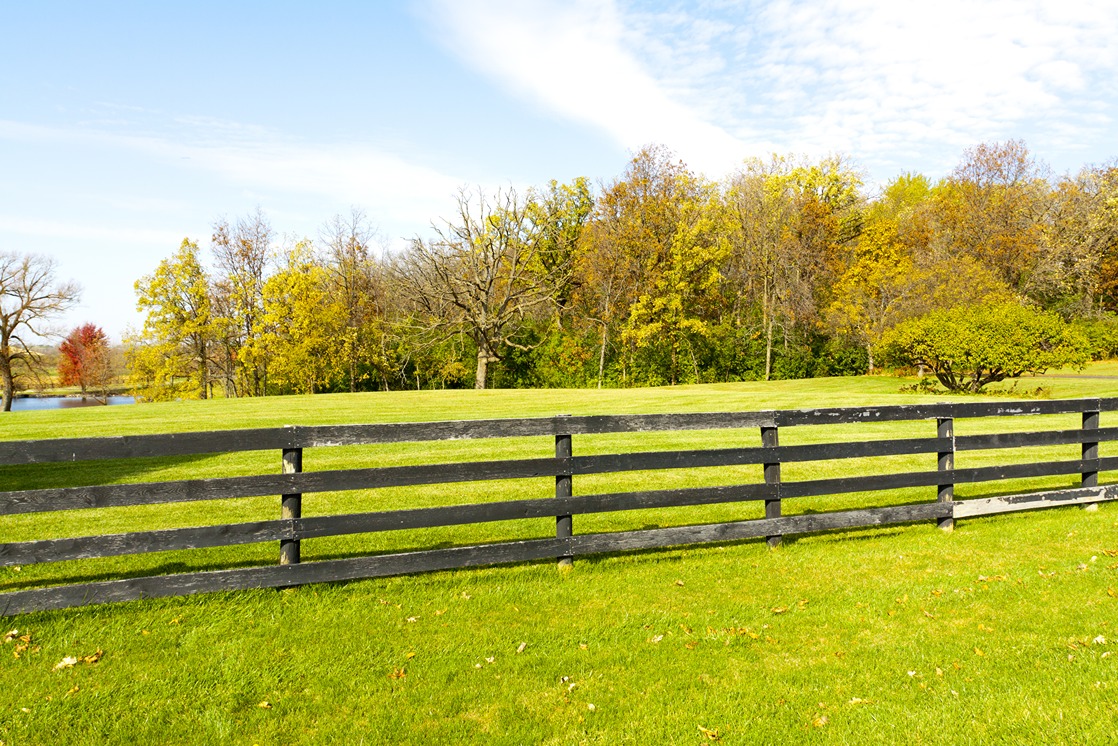
A black vinyl ranch rail fence has grown in popularity more recently, especially among homeowners chasing a more modern, defined look. Black rails tend to visually recede against greenery during the growing season while still standing out clearly against snow or dry grass, giving the fence a sharper silhouette year round.
Post caps add a small but noticeable finishing touch to either color choice. Most vinyl post and rail fence systems include matching caps designed to shed water and keep moisture from sitting on top of hollow vinyl posts, which helps the whole system hold up over the long fence lines common on larger properties.
💡 Pro Tip: If you're torn between color options, request a few post caps or short rail samples from your installer before deciding. Color reads differently under actual sunlight than it does on a screen or in a small swatch.
Where This Ranch Style Fence Works Best
Ranch rail fencing shines in specific settings more than others, and knowing where it fits saves you from choosing the wrong style for your property. A vinyl ranch rail fence Seattle area homeowners install tends to cluster around a few clear use cases.
- Large Snohomish County lots. Open acreage benefits from a boundary that defines the property line without interrupting the view.
- Woodinville and Duvall horse properties. Post and rail fencing has a long history with horse fence and livestock containment on larger parcels.
- Front yard border fencing. A ranch style fence gives definition without visually blocking your yard from the street.
- Lakefront properties. When the view is the whole point, ranch fencing marks the boundary while preserving what you're looking at.
Where This Ranch Style Fence Doesn't Work
It's just as important to know where this style falls short, since the wrong choice here creates real frustration later.
- Backyard privacy. The open rail design provides essentially no visual screening from neighbors.
- Small dog containment. Gaps between rails are typically too wide to reliably contain smaller breeds.
- Security. This is a boundary marker, not a barrier. It won't meaningfully slow down anyone determined to cross it.
If privacy matters more than open sightlines for your property, our vinyl fence installation team can walk you through solid panel styles built for full backyard coverage instead.
Vinyl Ranch Rail vs Wood Split Rail: Which Holds Up Better?
Rustic split rail fencing is popular for its natural aesthetic, but vinyl and wood perform very differently over time. So which material actually makes more sense for your property?
Quality vinyl fences generally last 20 to 30 years with proper maintenance, and the best-built panels can reach toward 50, while properly installed vinyl does not require significant long term repairs. Wood post and rail fencing remains cost effective for large projects, especially when budget matters more than long term upkeep. Vinyl fencing is UV resistant and resists fading, while wood split rail earns its rustic charm through natural weathering instead.
Ranch Rail vs Privacy Fence: How Do You Choose?
Ranch rail vs privacy fence comes down to one question: what do you actually need the fence to do? If you want to define a property line while keeping views open, ranch rail wins easily. If you want to block sightlines entirely, a privacy fence is the better fit.
Many homeowners on smaller residential lots lean toward privacy fencing, while larger properties with open land or rural charm tend to prefer the ranch rail look. Our 10 privacy fence ideas guide covers the alternative side of that decision if privacy turns out to be the priority.
How Vinyl Ranch Rail Fencing Gets Installed
Vinyl fences are easy to install thanks to pre-notched rails, but a proper installation still follows a clear process. Here's generally what to expect.
- Post layout. Corner posts and gate posts get set first, establishing the line for everything in between.
- Post depth and stability. Posts for vinyl fences should typically be set 30 to 36 inches deep, and below the local frost line where winters are cold, to keep the fence from heaving.
- Consistent spacing. Crews use consistent post spacing along long fence lines for a clean, even look from every angle.
- Rail installation. Pre-notched rails slide into each vinyl post, connecting the line without visible hardware.
- Transitions and corners. Plan transitions at gate or corner posts for aesthetics, since these points are where design choices become most visible.
Pairing Gates With Your Ranch Rail Fence
Ranch rail fences look best with gate styles that match their open, rustic aesthetic rather than heavy ornamental hardware. A simple two board drive through gate works well for vehicle or trailer access, while a single swing pedestrian gate suits walking paths and yard entries.
A 12 to 16 foot gate is common for trailers, so plan your gate posts accordingly if you expect equipment or livestock trailers to pass through. Keeping gate hardware proportional to the fence style matters here. An oversized, heavily accented gate looks out of place next to simple horizontal rails. Our team can walk you through gate choices, including drive-through and pedestrian options, during your free quote.
.jpg)
Maintaining Your Ranch Rail Fence Over Time
Vinyl fencing requires no painting or staining, and cleaning it typically requires only a garden hose and mild detergent. Vinyl expands and contracts with temperature changes, which is a normal part of how the material performs across seasons, not a sign of a problem.
Vinyl fencing is durable and withstands harsh weather conditions common to the Pacific Northwest, and a transferable warranty, often 20 to 30 years and sometimes a limited lifetime warranty, is common from reputable manufacturers. Our own workmanship warranty covers installation quality, giving you added confidence beyond the material itself.
Vinyl Ranch Rail Fence: Is It Right for Your Property?
A vinyl ranch rail fence gives large and rural properties a clean, low maintenance way to define boundaries without blocking the view that makes the land worth having in the first place. Whether you need a simple 2 rail border or a sturdy 4 rail livestock boundary, matching rail count to your actual needs makes all the difference, and settling the ranch rail vs privacy fence question early keeps your whole project on track. Ready to see what fits your property? Reach out to our team and request your free estimate today.
FAQs
What is the difference between a 2 rail and 3 rail vinyl fence?
A 2 rail vinyl fence offers a lighter, more open look suited to property line marking, while a 3 rail vinyl fence adds visual weight and a more classic ranch appearance. Both work well for boundary definition rather than containment or privacy.
Is a vinyl split rail fence strong enough for horses?
A 4 rail or 5 rail vinyl configuration is generally recommended for livestock and horse containment, since additional rails provide a stronger visual and physical boundary. A 2 rail or 3 rail setup is better suited to decorative or property line purposes.
Does a vinyl post and rail fence provide any privacy?
No, the open rail design is meant to preserve views rather than block them. If privacy is your main goal, a solid panel vinyl or wood fence style is a better fit.
How much maintenance does a vinyl post and rail fence need?
Very little. Cleaning generally requires only a garden hose and mild detergent, with no painting or staining required over the life of the fence.
Can this style of vinyl fence be painted a different color?
Vinyl ranch rail fencing typically comes pre colored, most commonly in white, beige, black, or gray, rather than requiring paint. Black rails have become a popular option for a more modern, defined look against greenery.








.svg)