.png)
.png)
Picking the right fence for your home comes down to two things most homeowners care about most: how much it costs and how much work it takes to keep up. The wood vs vinyl fence debate has been going on for decades, and in 2026, both materials are better than ever.
At Optima Fence and Deck, we've installed hundreds of fences across Bellevue and the surrounding area, and we want to give you the full story so you can make a confident, well-informed decision.
Here's the short answer before we get into the details: wood fences cost less to install upfront, and vinyl fences cost less over the full life of the fence. Everything beyond that depends on your specific project, your timeline, and what matters most to you as a homeowner.
Wood Fence vs Vinyl Fence: What Are These Materials, Really?
Understanding what each material is made of helps explain why they perform so differently over time.
A wood fence is a natural material, typically built from cedar, pressure treated pine, or redwood. Cedar is the most popular choice here in the Pacific Northwest because it naturally resists moisture and insect damage better than most other wood species.
A natural wood fence brings warmth and character to a property, and it's highly customizable. You can paint it any color, stain it to highlight the grain, adjust the fence height to your exact needs, and cut boards to accommodate almost any terrain along your property line.
A vinyl fence is manufactured from polyvinyl chloride (PVC), a rigid plastic engineered specifically for outdoor use. During production, manufacturers add titanium dioxide to protect the material from UV exposure and prevent fading over time.
Unlike wood, vinyl doesn't absorb water, won't rot, and resists insects without any chemical treatment. Vinyl fence panels come pre-made in standard sizes, which creates that clean, uniform appearance that many homeowners appreciate.
Both materials are widely available in multiple fence styles, from full privacy panels to decorative picket designs and ranch rail configurations. The choice between them isn't really about which one looks better on paper. It's about which one fits your life better over the long run.
Wood Fence vs Vinyl Fence Cost in 2026
Wood fence vs vinyl fence cost is almost always the first question we hear, so let's get into the real numbers.
Wood Fence Cost
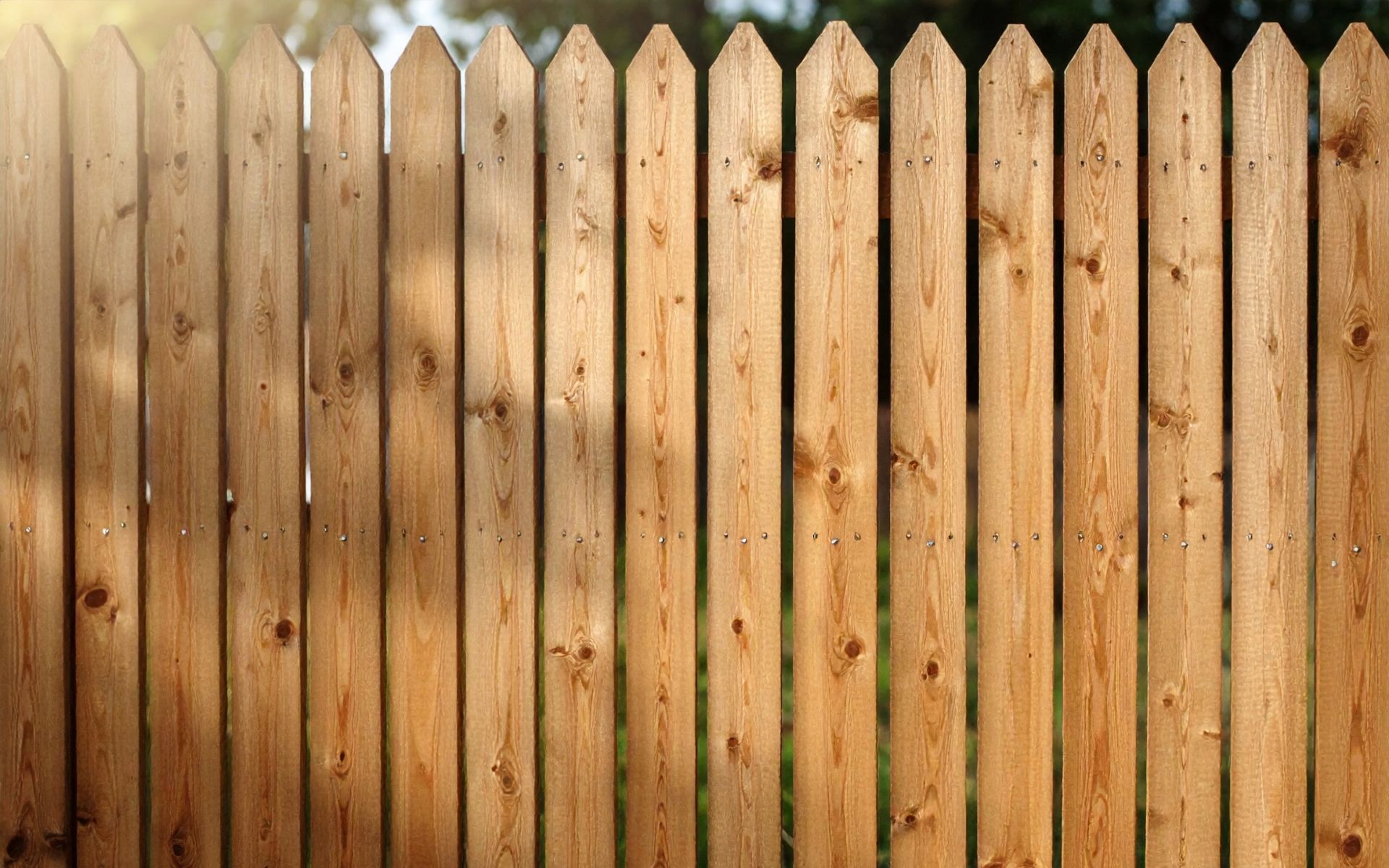
A wood fence in 2026 typically costs between $12 and $50 per linear foot installed, depending on the wood species, fence height, and fence style. Pressure treated pine sits at the lower end of that range.
A cedar fence, which is the preferred choice for many Bellevue homeowners because of its natural rot resistance, tends to run closer to the middle or upper end. For a 200-linear-foot project, expect to budget roughly $4,000 to $10,000 total with professional installation included.
Vinyl Fencing Costs
Vinyl fencing costs more upfront. The typical range runs from $25 to $60 per linear foot installed, putting that same 200-foot project between $6,000 and $12,000. The higher upfront cost reflects both the quality of the vinyl panels and the precision required for proper vinyl fence installation.
Where the Real Comparison Gets Interesting
The upfront cost gap between wood and vinyl is real, and we won't pretend it isn't. For budget-conscious homeowners, that initial cost difference matters. But the long-term cost picture looks very different.
A wood fence requires staining or sealing every two to three years, ongoing repairs for weather damage and insect damage, and eventual board or post replacements. Those costs add up to roughly $300 to $1,500 per year, depending on how much work your fence needs.
Over 25 years, that's potentially $7,500 to $37,500 in maintenance and repair spending on top of the original installation cost.
Vinyl requires almost no annual spending. Over that same 25-year window, vinyl is often 50 to 75% cheaper in total cost of ownership. Vinyl also tends to boost home value by $2,000 to $5,000, which adds another layer to the long-term value calculation.
Wood Fence Installation vs Vinyl Fence Installation
The installation process differs between the two materials, and those differences affect your timeline, labor costs, and how the fence handles your specific terrain.
Wood Fence Installation
Wood fence installation is a flexible, well-established process. Posts are set in concrete, horizontal rails are attached, and individual boards or pickets are fastened by hand. Because the lumber is cut and shaped on-site, your installer can adapt easily to slopes, angles, and irregular property lines.
Wood fence installation on a hillside is generally more straightforward than vinyl because the boards can be cut to follow the grade naturally. A professional crew typically completes a standard 200-linear-foot wood fence installation in one to two days.
Vinyl Fence Installation

Vinyl fence installation uses pre-manufactured panels that fit into posts set at precise intervals. The process is clean, fast, and produces a consistent result, but it requires careful planning because the panels come in fixed widths.
Racking a vinyl fence on a steep slope has more limitations than wood, though most residential properties in Bellevue don't present any major challenges. A professional installer will map out the post spacing before the first hole is dug to make sure every panel fits correctly.
In both cases, we strongly recommend professional installation. The long-term performance of any fence depends heavily on how well the posts are set and how correctly the panels are aligned.
A properly installed fence, whether wood or vinyl, will outlast a rushed or poorly executed DIY installation by years.
Maintenance Needs: How Much Work Does Each Fence Actually Require?
This is the category where the two materials separate most clearly, and for many homeowners, it's the deciding factor.
Maintaining a Wood Fence
A natural wood fence needs regular maintenance to stay in good shape. Here's what that typically looks like in practice:
- Staining or sealing every 2 to 3 years to prevent rot and moisture penetration
- Annual inspection for cracked boards, loose posts, or early signs of rot
- Repairs as needed for weather damage, insect damage, or shifted fence sections
- Repainting every several years if your fence is painted rather than stained
Skipping regular upkeep is where many homeowners get into trouble. In Bellevue's wet climate, an unmaintained cedar fence can start showing real deterioration within five to seven years.
Regular sealing is not optional here; it's what keeps a wood fence in good shape long enough to justify the installation cost.
Maintaining a Vinyl Fence
A vinyl fence offers a genuinely different maintenance experience. The main task is an occasional cleaning to remove dirt, mildew, or algae that builds up over time. Most of the time, a garden hose and mild soap take care of it in under an hour. For heavier grime, power washing works well without damaging the surface.
That's essentially the full maintenance list for vinyl. No staining, no sealing, no painting, and no chemical treatments. The material's composition means it won't rot, rust, or suffer from insect damage regardless of local conditions.
For homeowners who want minimal upkeep without sacrificing performance, vinyl is the straightforward choice.
How Long Do Wood and Vinyl Fences Last?
Lifespan is directly connected to maintenance, but here are realistic expectations for both materials.
A wood fence with consistent regular maintenance typically lasts 15 to 20 years. Pressure treated pine can sometimes push toward the 20-year mark in the right conditions. A cedar fence in Bellevue's wet climate, without consistent sealing, often falls closer to the 10 to 15 year range before needing significant work or full replacement.
The shorter lifespan of a neglected wood fence is one of the most common reasons homeowners end up spending more on their fence than they originally planned.
A vinyl fence has a considerably longer lifespan: 25 to 50 years under normal residential conditions. Because vinyl doesn't absorb water, it avoids the rot, warping, and freeze-thaw damage that shortens wood's life in climates like ours.
Many vinyl manufacturers back their products with lifetime warranties, which reflects their confidence in the material's long-term durability. For Bellevue homeowners dealing with persistent rain and humidity nine months out of the year, that performance difference is meaningful.
Is Vinyl Fencing Low Maintenance?
Yes, vinyl fencing is genuinely low maintenance. Unlike a wood fence, vinyl doesn't need staining, sealing, or painting. Cleaning with a garden hose and mild soap once or twice a year is typically all that's required to keep vinyl fence panels looking good.
There's no need to budget for annual repairs, and the material won't rot or suffer from insect damage regardless of local weather conditions.
Do Vinyl Fences Last Longer Than Wood?
Yes, vinyl fences last significantly longer than wood fences in most conditions. A well-maintained wood fence lasts 15 to 20 years, while a vinyl fence typically lasts 25 to 50 years.
In wet or humid climates, the gap widens because vinyl resists the moisture damage that accelerates wood deterioration. Most vinyl fence manufacturers offer lifetime warranties to back up that durability.
Which Fence Is the Right Choice for Bellevue Homeowners?
There's no universal correct answer, but there are some clear patterns that point most homeowners in one direction or the other.
Choose a wood fence if:
- Your current budget makes the lower upfront cost a priority
- You love the natural beauty and warmth of real wood and plan to stay on top of regular maintenance
- Your property has significant grade changes where wood's flexibility is an advantage
- Sustainability matters to you and you prefer a natural, renewable fence material over plastic
Choose a vinyl fence if:
- You want the most cost-effective option over the full life of the fence
- You plan to stay in your home for 15 or more years and want long-term value without long-term labor
- Bellevue's wet climate makes you nervous about rot and weather damage to a wood fence
- You want a privacy fence with solid panels that won't warp, gap, or require repainting
- Pet containment is a priority and you need a consistently solid, gap-free barrier
- Curb appeal and home resale value are part of your thinking
One thing worth addressing directly: many homeowners still picture vinyl as looking cheap or artificial. That's no longer accurate. Today's vinyl fence panels are available in wood-grain textures, multiple color options, and a wide range of fence styles that closely replicate the look of a natural wood fence while delivering the performance of a synthetic material.
Wood vs Vinyl Fence: A Side-by-Side Summary
The wood fence vs vinyl fence decision is really a question of short-term vs long-term thinking. Wood costs less today and looks great for years when properly maintained.
Vinyl costs more to install but saves you money, time, and effort over the full life of the fence.
For most homeowners in Bellevue, when we walk through the full picture together, vinyl is the most cost-effective option over time.
Ready to Install Your New Fence in Bellevue? Let's Talk.
At Optima Fence and Deck, we specialize in both wood fence installation and vinyl fence installation for homeowners across Bellevue and the surrounding communities. We know what holds up in the Pacific Northwest, and we'll give you an honest, no-pressure recommendation based on your specific project, your budget, and your long-term goals.
Whether you're leaning toward a cedar fence for its natural character or a vinyl fence for its low-maintenance durability, we're here to help you get it right the first time.
Contact Optima Fence and Deck today for your free estimate. We'll walk your property, talk through your options, and give you a clear quote so you can move forward with total confidence.
FAQs
Is it cheaper to do a vinyl fence or a wood fence?
A wood fence is cheaper upfront, typically costing $12 to $50 per linear foot installed compared to $25 to $60 per linear foot for vinyl fence installation. For a 200-foot fence, wood comes in at $4,000 to $10,000 while vinyl runs $6,000 to $12,000. Over time, however, vinyl is the more cost-effective option because it requires near-zero maintenance, while wood can cost $300 to $1,500 per year in staining, sealing, and repairs. Over 25 years, vinyl is typically 50 to 75% cheaper in total cost of ownership.
Do vinyl fences last longer than wood?
Yes, vinyl fences last significantly longer than wood fences. A properly maintained wood fence typically lasts 15 to 20 years, while a vinyl fence lasts 25 to 50 years under normal residential conditions. In wet or humid climates, the gap is even more pronounced because vinyl resists the moisture damage and rot that shorten a wood fence's lifespan. Most vinyl fence manufacturers back their products with lifetime warranties.
Is vinyl fencing low maintenance?
Yes, vinyl fencing is one of the lowest-maintenance fence materials available. It doesn't need staining, sealing, painting, or chemical treatment. Routine cleaning with a garden hose and mild soap, or occasional power washing, is all that's needed to keep vinyl fence panels looking clean. Unlike wood, vinyl won't rot, warp, or suffer from insect damage, which eliminates most of the recurring upkeep costs associated with a natural wood fence.
Is wood or vinyl better for a fence?
The better choice depends on your priorities. Wood is better if you want a lower upfront cost, a natural aesthetic, or a fence that can be customized with paint or stain. Vinyl is better if you want long-term value, minimal upkeep, and a fence that holds up in wet or humid climates without regular maintenance. For most homeowners planning to stay in their home for 15 or more years, vinyl offers a stronger return on investment over the full life of the fence.
How long does a wood fence last?
A wood fence with consistent maintenance, including staining or sealing every two to three years, typically lasts 15 to 20 years. Pressure treated pine can reach 20 years in favorable conditions, while cedar in a wet climate like Bellevue may last closer to 10 to 15 years without regular upkeep. Skipping maintenance accelerates rot, insect damage, and weather damage, significantly reducing a wood fence's lifespan.
What are the pros and cons of a vinyl fence?
The main advantages of a vinyl fence are its long lifespan (25 to 50 years), near-zero maintenance needs, resistance to rot and insect damage, and strong performance in wet or humid climates. Vinyl fence panels are also available in many styles and colors, including wood-grain finishes. The primary drawback is the higher upfront cost compared to wood, which runs $25 to $60 per linear foot installed. Vinyl also has fewer on-site customization options, as the pre-manufactured panels come in fixed sizes.
Does a vinyl fence add value to a home?
Yes, a vinyl fence can boost home value by approximately $2,000 to $5,000, depending on the property, fence style, and local market. Vinyl's clean appearance, long lifespan, and low maintenance requirements are appealing to potential buyers, particularly in neighborhoods where curb appeal and move-in-ready condition matter. A well-installed vinyl fence also signals to buyers that the property has been maintained with quality materials.
What is the best wood for a fence?
Cedar is widely considered the best wood for a fence in wet or humid climates like Bellevue, because it naturally resists moisture, rot, and insect damage without chemical treatment. Pressure treated pine is a more affordable alternative that offers good durability through chemical preservation, making it a popular choice for homeowners focused on lower upfront costs. Redwood is another high-quality option, though it tends to be more expensive and less readily available in many markets.


.png)






.svg)