.png)
.png)
Here's the trap a lot of Eastside homeowners fall into. They look at the neighbor's existing fence, assume their own project is fair game, and start digging.
Then the trouble starts:
- A violation letter shows up
- The fence comes down
- The deposit, in some newer communities, is gone
The reason almost always traces back to one thing: HOA fence rules that the homeowner never checked before construction started.
This guide walks through HOA fence rules in Bellevue, Kirkland, and Sammamish: how they work, what passes architectural review most easily, and how to get approved without the back-and-forth that drags a project out for weeks.
City Permit vs. HOA Approval: Two Separate Hurdles
A lot of confusion starts here, so it's worth clearing up first. A city fence permit and HOA approval are two different things, and on the Eastside you often need to clear both.
The city side is fairly simple. Bellevue, Kirkland, and Sammamish all follow the same general pattern:
- A solid fence up to 6 feet in your side or rear yard typically needs no building permit
- Go over 6 feet and a permit kicks in
- Front yard fences are capped lower, usually around 4 feet, with corner sight-triangles dropping to about 3 feet so drivers can see
Kirkland adds its own wrinkle near arterials and shorelines, and Sammamish layers in environmental review when a lot sits near a wetland or steep slope.
But here's the part that catches people. Clearing the city does not mean you have clearance to build. Your HOA is a private layer sitting on top of city code, and it can be far stricter.
The city might happily allow your 6-foot cedar fence while your HOA board rejects it over the stain color or fence placement. That second approval is the one that quietly costs people their deposit, because they never knew it applied to them.
How HOA Fence Rules Work in Bellevue Neighborhoods
Bellevue has one of the highest rates of HOA-governed communities on the Eastside. That means a large share of homeowners here are bound by covenants, conditions, and restrictions, usually shortened to CC&Rs.
These HOA fence restrictions frequently dictate fence height, approved materials, color, and placement well beyond anything the city requires.
The mechanism that enforces them is the architectural review committee, often called the ARC. Before you build, you submit your plan, and the board either approves it, rejects it, or asks for changes. That step is non-negotiable in most covenant communities, and it's the heart of how HOA fence rules get applied in practice.
Cougar Mountain, Lakemont, and the established ARC communities
In neighborhoods like Cougar Mountain and Lakemont, the review process tends to be well established and specific. Boards here often expect:
- A consistent material palette, frequently cedar or a board style that matches the existing look
- Stain or finish colors pulled from an approved range, not anything you like
- Height that lines up with neighbors, often 6 feet in back and lower in front
- Fence placement that respects sightlines, setback requirements, and shared green space
The takeaway: "the city allows it" is not the standard you're measured against. Neighborhood consistency is, and the ARC is the gatekeeper.
Newport Hills and similar communities
Newport Hills and other established Bellevue communities run on the same principle, though the specifics vary from one association to the next. Some have detailed written fence standards; others give the board broad discretion to approve or deny case by case.
The only reliable move is to pull your own CC&Rs and read the fence section before you commit to a design. Two homes a mile apart in Bellevue can sit under completely different HOA fence rules, so a neighbor's approved fence is a clue, not a guarantee.

Kirkland HOA Fence Guidelines and Natural-Area Rules
Kirkland brings two layers worth understanding:
- The city's own code restricts fence height near arterials and within the shoreline jurisdiction around Lake Washington, where fences may be limited or barred waterward of the shoreline setback
- Many Kirkland HOAs run their own fence guidelines that go further than the city, often restricting fencing material and style to maintain curb appeal and protect property values
When your lot backs up to a natural area
This is where Kirkland gets specific. If your property borders a greenbelt, a trail, or a sensitive area, both the city and your HOA may weigh in.
The common HOA preference in these spots is an open or semi-open fence style that preserves views and the natural feel of the corridor, rather than a tall solid wall. So a homeowner backing onto a greenbelt may find that a solid 6-foot cedar fence the city would permit gets turned down by the board in favor of something more open.
Kirkland HOA fence guidelines in these areas are usually built around protecting that shared natural backdrop and maintaining community standards.
Sammamish HOA Fence Restrictions and Plateau Communities
Sammamish sits on a plateau full of newer developments, and that detail shapes its HOA fence rules more than anywhere else on the Eastside. Newer neighborhoods tend to have the most detailed and tightly enforced CC&Rs, because the developer wrote them recently and the association is actively maintaining a uniform look.
Why newer Sammamish developments tend to be stricter
The pattern across many Sammamish HOA fence regulations looks like this:
- Tighter material and color requirements, since the whole neighborhood was built to one standard, often favoring low maintenance vinyl or cedar wood
- A required ARC submission with drawings and sometimes a plot plan showing fence placement and dimensions, to meet setback requirements
- Real consequences for skipping approval, including the forfeited deposit some communities hold during a build
Add Sammamish's environmental overlay, where lots near wetlands or steep slopes can trigger a separate critical-areas review, and you have a city where checking both the city and the HOA before building is not optional. It's the difference between a smooth install and a torn-out fence.

Getting HOA Fence Approval Without the Headache
Most of the pain people associate with HOA fence rules comes from doing the approval out of order or guessing at what the board wants. Done in sequence, it's manageable.
How to request architectural review
- Pull your CC&Rs and read the fence section. This tells you height, fencing material, and color limits before you design anything.
- Put together your submission: a simple site plan showing fence placement, the height, the fencing material, and the finish color.
- Submit to the ARC and wait for written approval before fence installation begins.
- Keep the approval on file. If a dispute comes up later, that paper is what protects you.
Typical approval timelines
Timelines vary widely by association:
- An active board can turn around a clean submission in a couple of weeks
- Boards that meet monthly can push you out 30 days or more if you miss a meeting
Build this lead time in from the start so approval doesn't become the thing that stalls your fence project.
Which fence styles pass HOA boards most easily
The fences that sail through review tend to share a few traits:
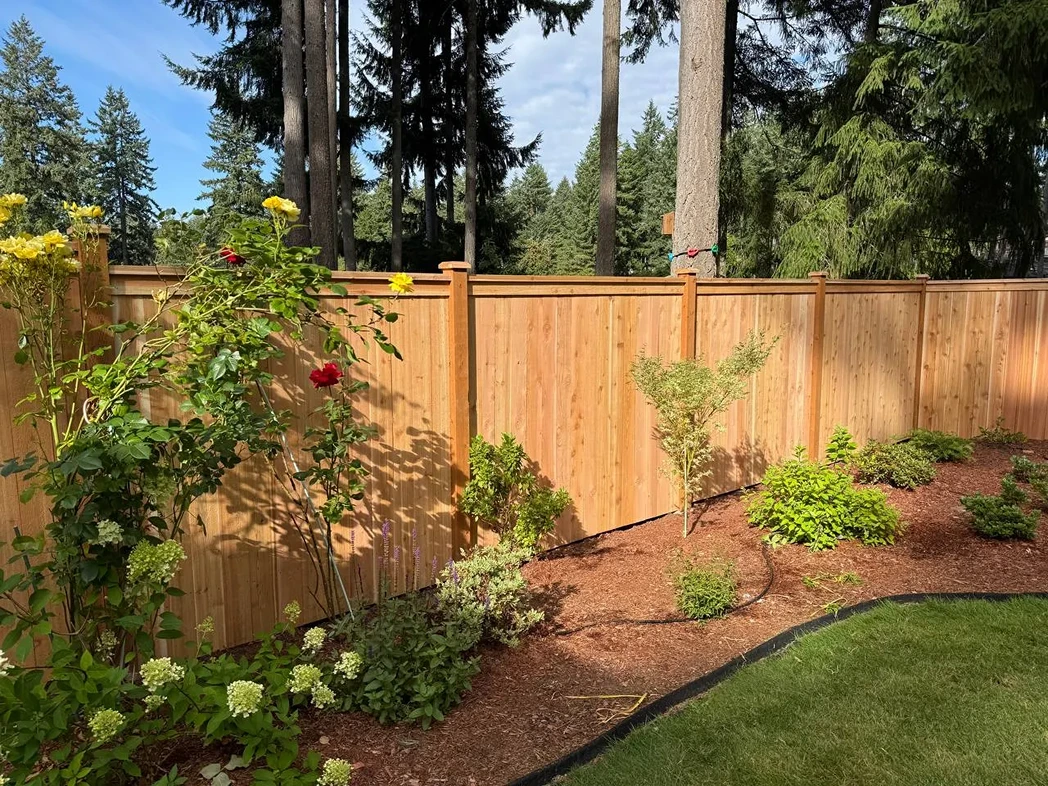
- They match the neighborhood. A cedar fence in a cedar neighborhood rarely raises an eyebrow
- They stay at or near the common height rather than pushing the city maximum, respecting HOA height restrictions
- They use an approved or neutral finish color
- Near greenbelts and natural areas, they lean open rather than solid
This is also the answer to the question that starts most of these projects. Can you build a horizontal ipe fence when your neighbor has standard cedar?
Sometimes yes, if your CC&Rs allow the fencing material and the board signs off. But in a community built around a consistent look, a dramatic departure is exactly the kind of thing an ARC exists to catch. The safe path is to confirm in writing first.
What Happens If You Skip HOA Approval
It's worth being blunt about the downside, because it's what the whole "without losing your deposit" question is really about.
Skip the approval and the typical sequence runs:
- A violation notice
- A window to fix it
- Escalating fines if you don't
- In the worst case, removal of a fence you already paid for, at your own expense
In newer communities that hold a deposit during construction, ignoring the process can mean forfeiting it outright. None of that depends on whether the city would have allowed the fence. The HOA enforces its own rules separately, and a technically legal fence can still come down.
Build It Right the First Time
The homeowners who avoid all of this aren't the ones with the most expensive fences. They're the ones who read their CC&Rs, submitted to the ARC, and got the yes in writing before anyone touched a shovel.
That's the part Optima Fence and Deck handles for you. We've built HOA-compliant fences across Cougar Mountain, Lakemont, and the Sammamish plateau, so we know what these boards look for and how to put together a submission that clears review the first time instead of the third.
If you're staring at a CC&R packet and not sure what your board will accept, let's sort it out together before you commit to a design. Get in touch with our expert team and we'll walk your property, talk through what passes in your specific neighborhood, and take the ARC paperwork off your plate.
FAQs
Do I need HOA approval for a fence if I already have a city permit?
Yes, in most covenant communities. A city permit and HOA approval are separate. Clearing Bellevue, Kirkland, or Sammamish on the building-code side does not clear your association, and the HOA can still reject a design the city would allow.
How long does HOA fence approval take in Bellevue?
It depends on the association. A clean submission to an active ARC can come back in a couple of weeks, but boards that meet monthly can push your timeline out 30 days or more if you miss a meeting. Submit early.
What fence styles pass HOA approval most easily?
Fences that match the neighborhood. Cedar or board styles in an approved color, kept near the common height, with open designs near greenbelts, tend to clear review with the least friction.
Can I build a different fence than my neighbor?
Sometimes. If your CC&Rs allow the fencing material and the board approves it, a different style is possible. But in communities built around a uniform look, a major departure is exactly what architectural review is designed to flag, so confirm in writing first.
What happens if I build a fence without HOA approval?
You risk a violation notice, fines, and in the worst case an order to remove the fence at your own expense. Some newer communities also hold a construction deposit you can forfeit, which is how an unapproved fence ends up costing far more than the fence itself.
What are the consequences of not maintaining my fence according to HOA regulations?
Homeowners associations often require ongoing maintenance to keep fences in good repair and protect property values. Letting a fence fall into disrepair can trigger violation notices, fines, or an order to repair or replace it to meet community standards.
Who is responsible for the fence on a shared property line in an HOA?
In an HOA, responsibility usually comes down to your CC&Rs and any agreement between the neighbors who share the line. Washington's Good Neighbor Fence Law also touches on cost-sharing for boundary fences. Our guide to shared fence law in Washington breaks down how that works and what to put in writing before you build.



.png)






.svg)