.png)
.png)
If you searched for how to maintain a composite deck, you probably already own one, or you're about to invest in one. The sales pitch is always the same: composite decking is low maintenance. That's true compared to traditional wood decks, but it doesn't mean zero maintenance.
Bellevue's wet winters, shaded lots, and heavy fall leaf drop create specific challenges that a generic care guide won't cover. Here's the real seasonal checklist for protecting your composite deck boards in western Washington.
If you're still deciding between composite and wood before committing to either, our composite vs. wood cost and maintenance guide covers that comparison. This guide assumes you already have composite decking and walks through the season-by-season care it actually needs.
How Long Does Composite Decking Actually Last in Bellevue's Climate?
Composite decking typically lasts roughly 25 to 50 years, far longer than traditional wood decks. That lifespan isn't automatic. It depends on how consistently you clean the composite decking surface and keep water from sitting where it shouldn't.
A few composite deck lifespan factors make the biggest difference here:
- Shade exposure: a deck under mature trees stays damp longer than one in full sun and needs more frequent mold checks
- Winter moisture: how much rain and standing water the boards see each season, especially in low-lying yards
- Cleaning frequency: how often you actually clean and inspect the surface instead of letting dirt build up over months
- Board quality: early generation composite products fade and stain more than today's materials, which use denser recycled wood fibers
Composite decking is designed to be lower maintenance than wood, and it resists fading, staining, and scratching far better than traditional wood decks. Real composite decking maintenance requirements still exist though. Boards can naturally fade a shade or two in their first year as they weather in, so it helps to understand what's actually involved up front instead of expecting the deck to look brand new forever.
Homeowners who have seen the difference firsthand often browse our completed deck transformations before deciding whether their existing composite deck is worth restoring or ready for replacement.
Your Annual Composite Deck Maintenance Checklist
Composite decking maintenance follows the seasons here more than a strict calendar. Here's a simple breakdown of what each season typically calls for.
💡 Pro Tip: Keep a sticky note on your calendar for the first dry weekend each season. That single reminder covers most of what composite deck maintenance actually requires.
How to Maintain a Composite Deck After Spring Pollen Season
Spring is when Bellevue's yellow pollen coats every outdoor surface, including your deck boards. This is the best time each year to reset the entire deck surface before summer gatherings begin.
- Sweep the entire deck surface with a broom or leaf blower to remove loose pollen and surface debris.
- Mix warm soapy water using a mild soap, never a harsh detergent or bleach.
- Gently scrub the deck boards with a soft-bristle brush, working with the grain of the recycled wood fibers.
- Rinse thoroughly with a garden hose, keeping water pressure low so it doesn't force moisture between boards.
- Inspect your deck for damage, including loose fasteners, cracked boards, or gaps that have shifted over winter.
This spring reset is really the anchor point for how to maintain a composite deck all year.
- Check shaded corners and areas near planters first. These spots hold moisture the longest after winter and show the first signs of mold or mildew.
- A five minute check now can save a much bigger cleaning job in July.
Cleaning a Composite Deck Without Damaging the Surface
Cleaning a composite deck the right way protects the stain warranty that most composite decking materials carry. A few simple rules keep you from voiding that coverage by accident.
- Use a soft bristled scrub brush or nylon scrub brush, never a wire brush or sharp tools.
- Skip bleach and harsh chemicals. Mild soap and warm water handle most dirt and debris.
- For oil and grease stains, treat the affected area quickly with a dedicated composite deck cleaner.
- Keep pressure washing around 1,500 PSI, well under Trex's 3,100 PSI ceiling, and use a wide fan tip held at least eight inches from the boards.
- Move furniture pads occasionally so trapped moisture and mildew growth don't develop underneath.
- Rinse the entire deck surface with a thorough rinse after cleaning so no soap residue is left behind to attract dirt.
Early generation composite products were more prone to staining than today's composite decking materials, and uncapped boards from before about 2009 should never be pressure washed at all, since they lack the protective shell. The same gentle cleaning methods still apply across the board.
Fall Leaf Removal: Stopping Tannin Stains Before They Set
So how do you stop fall leaves from staining a composite deck? Use a leaf blower weekly through October and November, and rinse the deck surface as soon as heavy leaf drop lets up.
Removing leaf stains from composite deck boards is much easier before the tannins set than after.
- Wet leaves left sitting for days release natural tannins.
- Tannins can darken lighter-colored decking, especially Trex decking and similar composite decking materials in tan or gray tones.
- Keeping gaps between decking boards clear of pine needles and other debris allows for better drainage.
- Better drainage reduces how long leaves stay wet against the surface in the first place.

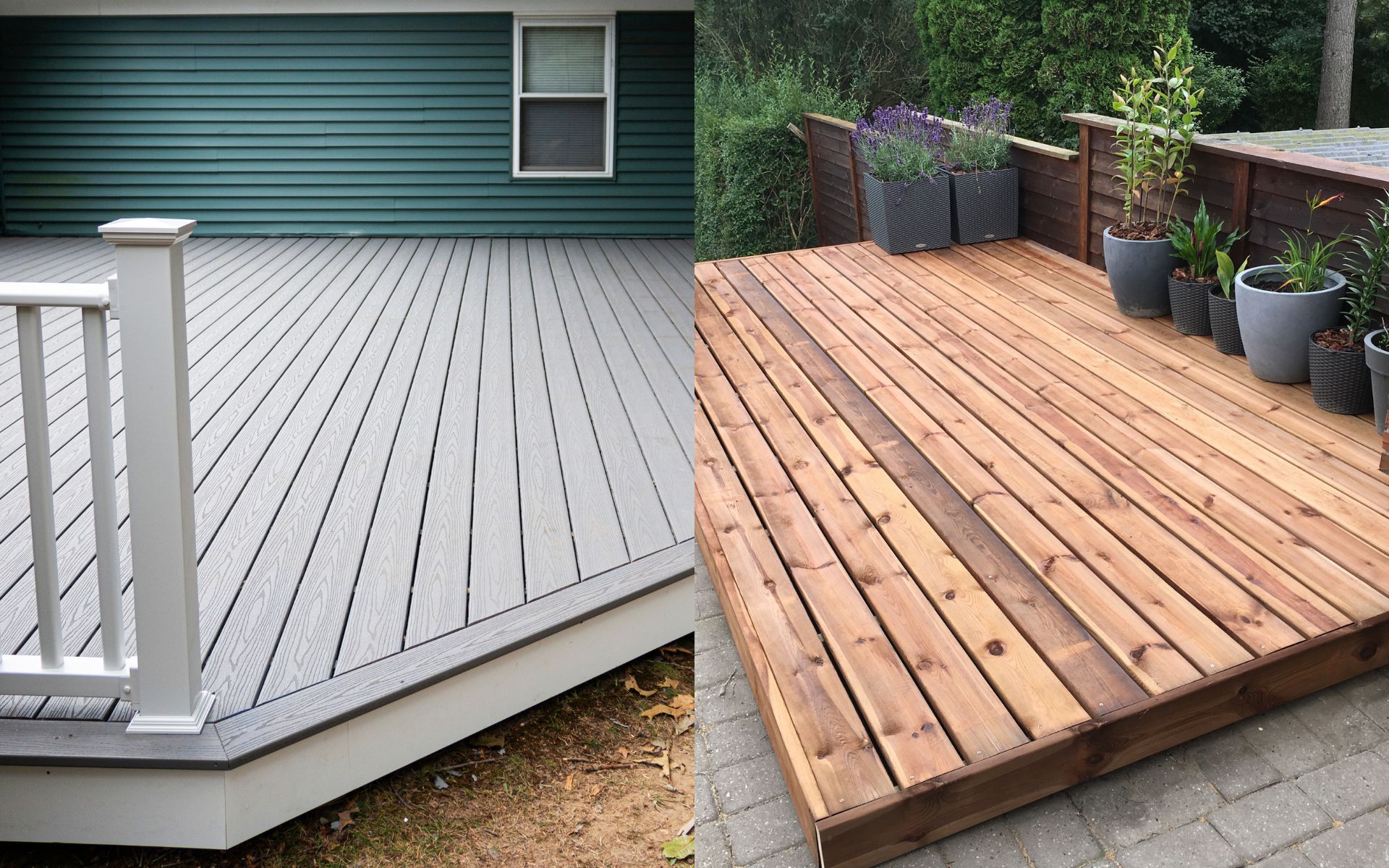
Composite Decking vs Wood Decks: Maintenance Requirements Compared
Seeing composite and wood side by side makes the maintenance gap easier to understand.
If you're weighing a wood fence alongside your deck project, the same weather exposure applies. Homeowners planning a new wood fence installation in Bellevue often ask us how to keep cedar looking sharp. Our guide on how to properly stain a cedar fence covers that process in full.
Winter Freeze-Thaw Cycles: Protecting Boards, Fasteners, and Gaps
Bellevue winters bring freeze-thaw cycles that can loosen fasteners and shift boards slightly, even on stable composite decking. Composite boards remain stable in various weather conditions compared to wood, but they aren't immune to ground movement underneath them.
- Removing snow? Always use a plastic shovel or plastic snow shovel instead of metal shovels. Metal shovels can gouge or scratch the composite decking surface, and that damage doesn't buff out.
- Using ice melt? Choose calcium chloride over rock salt, which can stain lighter boards. Either way, rinse the deck once temperatures rise, since salt residue can corrode the fasteners underneath over time.
- Avoid standing water that refreezes directly against the boards. That repeated freeze-thaw cycle can stress fasteners and connectors below the surface over several winters.
- Watch for rust stains from metal furniture legs or uncoated screws on lighter colored boards during a wet winter.
- Wipe down excess moisture from furniture feet before storing them for the season, and swap in furniture pads to keep metal from sitting directly against the deck surface.
- Check gaps between boards after the first hard freeze. Ice can wedge debris into the gaps, which blocks drainage once things thaw.

How Do You Remove Mold and Mildew From a Composite Deck?
Mold and mildew develop fastest on shaded, north-facing decks that stay damp longer between rains. Clean it promptly with a composite deck cleaner or a mild soap solution and a soft bristle brush, scrubbing with the grain.
How to clean mold off composite decking, step by step:
- Start with a simple soapy water scrub for light mold and mildew, rinsing thoroughly afterward.
- For stubborn spots, use a dedicated deck brightener or a mild oxalic acid based cleaner.
- Always test any new cleaning product on a small, hidden section first.
- Use a commercial cleaner annually to inhibit mold development before it becomes visible, especially under tree cover or against a shaded wall.
- For heavily soiled areas, hot water mixed with your cleaning product works faster than a cold rinse alone.
- Keep drainage and airflow clear underneath the deck to prevent mold growth long term.
- Trim back overhanging branches where possible, since less shade means the boards dry out faster between rains.
Composite Deck Maintenance Mistakes Bellevue Homeowners Make
- Letting food spills sit instead of cleaning them within seven days, the window Trex sets to keep the stain warranty intact.
- Using metal shovels or sharp tools that scratch the composite decking surface.
- Skipping the spring inspection, so small issues turn into bigger repairs later.
- Pressure washing at high pressure instead of using a low, wide fan setting.
- Ignoring standing water near furniture legs, which traps moisture underneath.
- Forgetting to check the gaps between boards, where pine needles and leaves quietly pile up unnoticed.
💡 Pro Tip: Trex deck care and maintenance guidance generally applies across most composite decking brands, since the underlying recycled materials and rubber backing components behave similarly in wet climates.
When Should You Call a Professional Instead of Doing It Yourself?
Routine cleaning, sweeping, and snow removal are jobs most homeowners handle themselves. Call a professional when inspection reveals:
- Soft spots in the decking surface
- Separated boards that have pulled apart
- Fasteners that have pulled away from the frame underneath
- Any sign of trouble in the joists, ledger board, or footings
Composite deck maintenance can only go so far when the problem sits below the surface. That's a structural integrity question, not a cleaning one, and it deserves a proper look before your next gathering on the deck.
Protecting the Investment You Already Made
A well kept composite deck adds real value to your outdoor space for decades. Regular maintenance is really the only thing standing between that long lifespan and an early, costly replacement.
Knowing how to maintain a composite deck comes down to a few consistent habits: seasonal cleaning, prompt spill cleanup, careful snow removal, and a yearly inspection. None of it is complicated, and none of it takes more than a few hours a year.
If your spring inspection turns up loose fasteners, soft boards, or damage beyond a simple cleaning, our team at OPTIMA Fence and Deck is glad to take a look and walk you through your options. You can request your estimate any time.
FAQs
How often should I clean my composite deck?
Most manufacturers recommend a deep clean once or twice a year, in spring and fall. Weekly sweeping with a broom or leaf blower keeps dirt and debris from building up.
Can I pressure wash a composite deck?
Yes, but keep the pressure washer around 1,500 PSI or lower, use a wide fan tip, and hold it at least eight inches from the surface. High pressure held too close can damage the composite decking surface and void your stain warranty.
What is the best way to remove mold from composite decking?
Scrub the affected area with warm soapy water and a soft bristle brush, working with the grain of the boards. For stubborn mold and mildew, a dedicated composite deck cleaner or deck brightener works well.
Do composite decks need to be sealed or stained?
No. Composite decking typically does not require staining or sealing, which is one of the main reasons homeowners choose it over traditional wood decks.
How do I remove snow from a composite deck safely?
Use a plastic shovel rather than metal shovels to avoid scratching the surface. Choose calcium chloride based ice melt over rock salt, and rinse the deck once the weather warms so salt residue doesn't sit on the fasteners and connectors underneath.



.png)







.svg)