.png)
.png)
Have you ever walked past a neighbor's cedar fence and noticed dark orange streaks bleeding down from every nail head? That's not just an eyesore. It's a fastener problem, and it's completely preventable.
Our homepage says it plainly: we only use stainless steel nails and fasteners on our fences. No rust stains, no cheap shortcuts. Here's why this one detail matters so much in western Washington, and what happens when a contractor skips this detail.
Why Do Rust Streaks Show Up on Cedar Fences?
Rust streaks happen when a fastener starts corroding under the surface of the wood. Water works its way into the nail hole, the metal breaks down, and the rust bleeds outward along the grain.
- Electro-galvanized nails are not recommended for cedar due to poor rust resistance.
- Their thin zinc coating wears through fast in wet climates.
- Once the coating fails, the bare steel underneath rusts within a season or two.
- The stain then travels down the fence board every time it rains.
This is one of the most common cedar fence hardware complaints homeowners bring to us after a few wet winters.
How Rust Actually Travels Through the Wood
Wood grain acts like a wick. Once moisture and rust reach the surface, they follow the grain lines outward from the nail or screw.
- The stain often shows up several inches below the fastener, not right at the hole.
- By the time it's visible, corrosion has usually been active for months.
- A single bad batch of fasteners can affect an entire ring shank nails for fence installation at once, not just one board.
Why This Happens More in Bellevue Than Drier Climates
- Western Washington sees months of near constant rain and high humidity.
- Wood rarely gets a chance to fully dry out between storms.
- That extended moisture exposure is exactly the condition weak fasteners struggle with most.
Why Galvanized Nails Fail Faster in Western Washington
Cedar contains natural tannins, acidic compounds that give the wood its color and rot resistance. Those same tannins are harsh on many common fasteners.
- Cedar's chemistry reacts with lower grade metals over time.
- Constant rain and humidity keep the wood damp for long stretches each year.
- That combination speeds up corrosion on any fastener that isn't built for it.
- Hot dipped galvanized nails can rust and cause staining once their coating wears down.
Why Coating Alone Isn't Enough
A galvanized nail relies entirely on its outer zinc layer for protection.
- Once that layer scratches or wears thin, the steel underneath is exposed.
- Nail guns can chip the coating on impact, creating a weak point from day one.
- Cedar fence hardware built this way often looks fine for a year or two before problems start.
💡 Pro Tip: If you already see rust spots forming, don't wait. Once bleeding starts, it only gets worse with every rainstorm.
Stainless Steel Nails for Cedar Fence: The Fix That Actually Lasts
Stainless steel nails for cedar fence installs solve the corrosion problem at the source. The metal itself resists rust instead of relying on a thin coating that eventually wears away.
- Stainless steel nails prevent both the orange rust streaks and the dark blue-black tannin stains that plague coated and steel fasteners on cedar.
- They offer superior corrosion resistance in harsh, wet environments.
- Stainless steel nails can flex without breaking over time, which matters as boards expand and contract.
- Using stainless steel nails can extend the lifespan of a cedar fence by years.
- Cedar fence fasteners made from stainless steel resist corrosion better than standard steel nails.
Why the Extra Upfront Cost Is Worth It
- The fastener itself is a tiny fraction of a fence's total project cost.
- A rust stained board often needs sanding, staining, or full replacement to fix.
- Stainless steel nails for cedar fence installs avoid that repair cycle altogether.
For coastal properties with salt air exposure, Type 316 stainless steel nails are the recommended grade. Standard Type 304 stainless works well for most inland Bellevue and Puget Sound area yards.

Does Cedar Live Up to Its Reputation as the Most Durable Fence Material?
Cedar is often marketed as the most durable fence material for wet climates, and that reputation is mostly earned. Its natural oils resist rot and insects better than many other wood species.
- Cedar naturally resists decay without chemical treatment.
- It holds up well against western Washington's rain and humidity.
- Straight, tight grain boards resist warping better than lower grade lumber.
Where the Reputation Breaks Down
Even the most durable fence material on the market can fail early if it's assembled with the wrong hardware.
- A cedar picket held together with rusting fasteners won't outlast a lower cost material installed correctly.
- The wood itself isn't usually the weak link. The fastener is.
- Choosing the right cedar fence fasteners protects the investment you already made in quality boards.
Ring Shank Nails vs Standard Nails vs Screws: Which Fastener Wins?
Ring shank nails for fence applications are the industry standard for a reason. The ridges around the shank grip the wood fibers, giving far more holding power than a smooth nail.
- Ring shank nails provide adequate strength for most residential fences.
- Ring shank nails are faster to install than screws, which matters on a large job.
- Screws are less time efficient than nails for full fence installation.
- Screw heads can fail at the head shank junction under stress.
- Ring shank nails prevent loosening in cedar fences caused by expansion and contraction.
Why Ring Shank Fence Nails Outperform Smooth Nails
- The ridges bite into the wood fibers instead of sliding straight through.
- That extra grip is what keeps cedar fence fasteners from working loose as boards move.
- Ring shank fence nails also resist popping back out over time, unlike smooth shank options.
What Cedar Fence Fasteners Actually Cost
Fastener choice affects your total project price more than most homeowners expect, even though the cost per piece looks tiny.
- Ring shank nails typically run about 1 to 1.5 cents each.
- Screws typically cost around 6 to 7 cents each for fence projects.
- Hot dip galvanized nails are cheaper than stainless steel nails up front.
- Stainless steel nails are generally more expensive than galvanized options, but the price difference is small per fence.
- Hot dip galvanized nails balance affordability and durability better than bargain electro-galvanized options.
Doing the Math Over the Life of a Fence
- The total fastener cost on an average fence is a small line item compared to labor and materials.
- Upgrading every fastener to stainless steel typically adds a modest amount to that line item.
- That small increase is generally far less than the cost of repainting or replacing rusted boards later.
How We Install Stainless Steel Fasteners on Every Cedar Fence Project
Here's how the right fastener choice actually plays out on a job site, from planning through the final walkthrough.
- Select the fastener grade based on the property's exposure to rain, sun, and salt air.
- Load the nail gun with ring shank nails for fence work, sized to the board thickness.
- Set the head diameter so the nail sits flush without splitting softer woods near the edge.
- Drive fasteners at the rails and pickets, spacing them to secure each board without overdriving.
- Add screws at gate hardware and other high stress points where extra pull resistance matters.
- Inspect every run before wrapping up, checking for missing or popped fasteners.
If you're planning a new wood fence installation in Bellevue, this is one of the standard details our crews follow on every job, not an upgrade you have to ask for separately.
.jpg)
Is Type 316 Stainless Necessary for Every Yard?
Not always. Type 316 stainless steel nails are recommended for coastal environments where salt air speeds up corrosion on almost any metal.
- Inland properties around Bellevue, Kirkland, and Redmond generally do fine with standard stainless fasteners.
- Waterfront or near shore properties benefit from the extra corrosion resistance of Type 316.
- A contractor can help you decide which grade fits your specific lot and budget.
- Ask about the difference in price before assuming Type 316 is automatically required for your project.
Questions Worth Asking Your Contractor
- What fastener grade do you use as your standard, and why?
- Do you charge extra for stainless steel, or is it included?
- Can you show examples of older fences you've built with ring shank nails for fence applications like this?
Your Cedar Fence Has the Wrong Fasteners
- Rust colored streaks running down from nail or screw heads.
- Nail heads popping slightly above the surface of the board.
- Loose pickets that shift or rattle in the wind.
- Dark stains near joints that weren't there when the fence was new.
- Screws that have sheared off at the head, leaving the shank stuck in the wood.
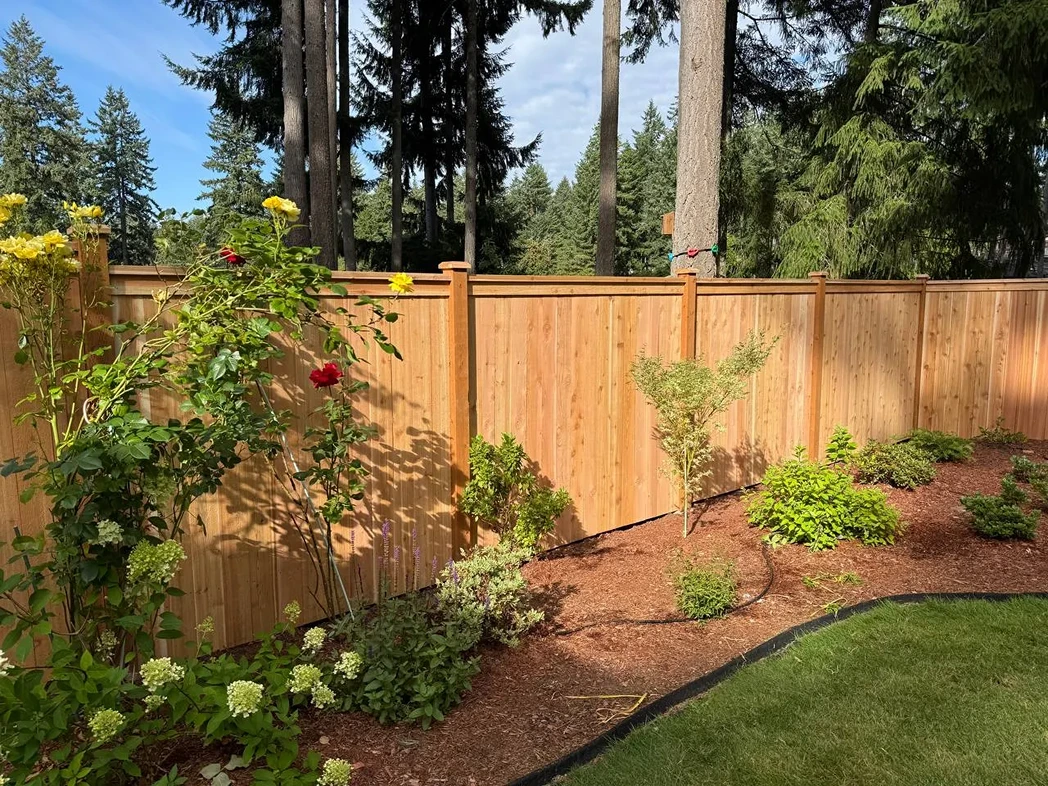
Take a look at some of our completed fence projects to see what a properly fastened cedar fence looks like years after installation, with no rust bleed in sight.
Common Fastener Mistakes That Shorten a Cedar Fence's Life
- Using bargain electro-galvanized nails to save a small amount upfront.
- Skipping stainless steel at gates, where stress on fasteners is highest.
- Overdriving nails, which crushes the wood fibers and reduces holding power.
- Mixing fastener types across the same fence line, which leads to uneven wear.
- Ignoring early rust spots instead of addressing them before they spread.
- Choosing a contractor based on price alone, without asking what fastener grade they use.
Most professional fence contractors recommend sticking with one fastener grade across an entire project to keep performance consistent from post to post. It's a small question to ask before work begins, and the answer tells you a lot about how a fence will hold up years down the road.
The Small Detail That Makes a Real Difference
A cedar fence is only as strong as what's holding it together, and fasteners are an easy detail to overlook. Choosing the best nails for cedar fence construction is a small upfront decision that pays off in a fence that stays clean and secure for years.
It's one of many things we specify on every Optima Fence and Deck project, whether you notice it or not. If you want a fence built with the right hardware from the first nail to the last, reach out to our team and we'll walk you through the details.
FAQs
Why do cedar fences get rust stains?
Rust stains usually come from fasteners that aren't built for cedar's natural tannins and constant moisture. Once a nail's coating wears through, rust forms and bleeds down the board.
Are stainless steel nails worth the extra cost for a cedar fence?
Yes, for most homeowners the small price difference is worth avoiding rust stains and loose boards later. Stainless steel nails typically last the life of the fence without corroding.
What are ring shank nails used for on a fence?
Ring shank nails have ridges along the shank that grip wood fibers tightly, giving more holding power than smooth nails. They're the standard choice for fence boards, pickets, and rails.
Do screws work better than nails for a cedar fence?
Screws offer strong holding power but take longer to install and can fail at the head under stress. Ring shank nails are generally faster and provide adequate strength for most residential fences.
Is Type 316 stainless steel necessary for a cedar fence?
Type 316 stainless is recommended mainly for coastal or waterfront properties with salt air exposure. Inland yards typically do well with standard stainless steel fasteners.


.png)






.svg)