.png)
.png)
What a Hog Wire Fence Costs in Bellevue (Per Linear Foot, Installed)
Most Bellevue homeowners are surprised that the number isn't as far above cedar as they assumed. The hog wire fence cost per linear foot in Bellevue generally falls in the $45 to $75 range, though where you land depends on a handful of things specific to your lot.
That range reflects framed, professionally installed hog wire with set posts and concrete footings, not the bare agricultural wire or DIY frameless kits you'll see quoted far cheaper online. You're paying for a finished fence that lasts, not a roll of wire and a weekend.
What pushes you up or down that range:
- Panel height: A 3-foot pet-and-view fence costs less than a 6-foot run.
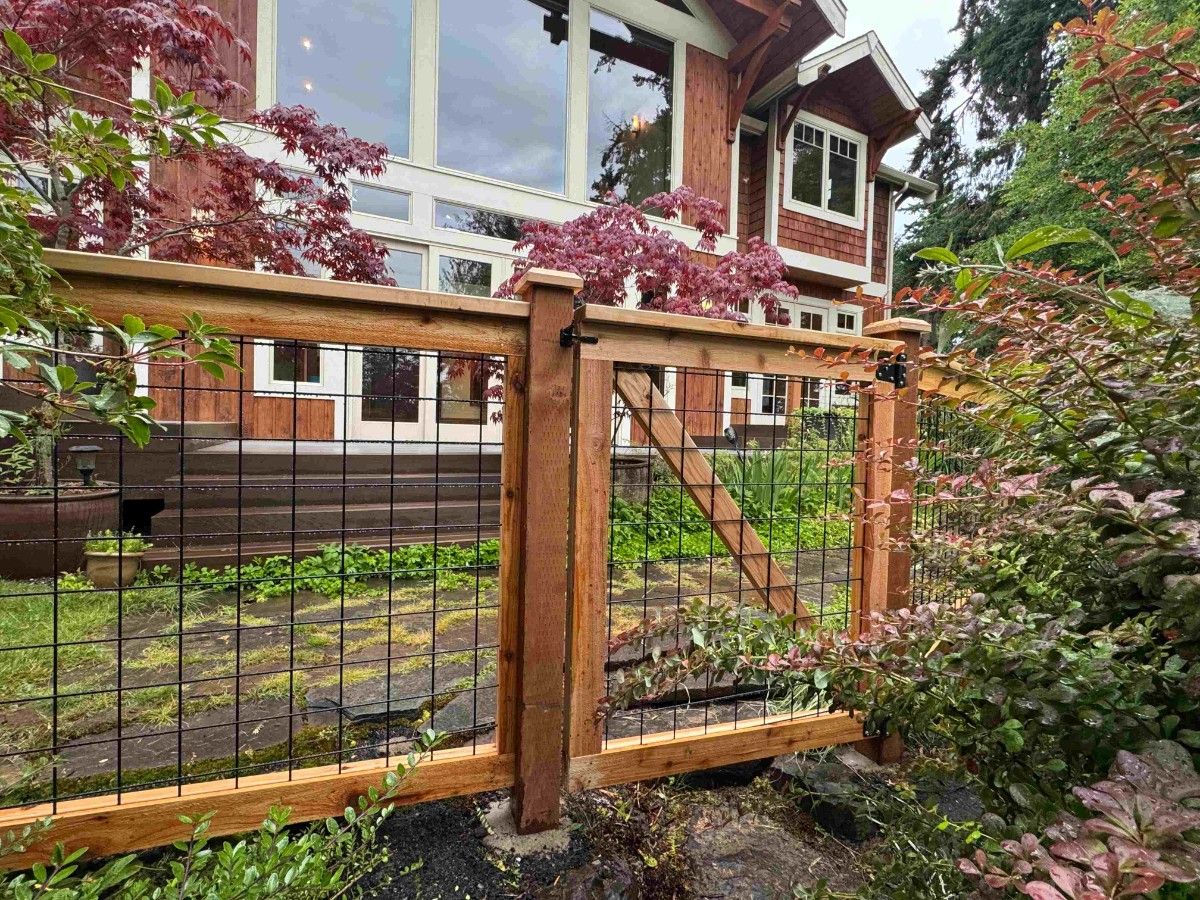
- Post material: Cedar posts with wire infill cost more than steel posts; the cedar-post look is popular on Eastside modern homes.
- Terrain: Sloped Somerset and Cougar Mountain lots take more labor costs than a flat Crossroads backyard.
- Removal: Tearing out an old cedar fence first adds to the day.
What's Actually Included in a Hog Wire Fence Installation
Here's where a professional hog wire fence installation differs from hauling materials home from a supplier.
- Site measurement and layout along the fence line
- Post setting and concrete footings for sturdy wood or metal posts
- Panel or rolled-wire mounting and tensioning
- Cleanup and old-fence haul-away
A quick real-world frame: a standard 100-foot backyard run lands roughly in the $4,500 to $7,500 window installed, depending on the choices above. Most residential hog wire fences sit well under the height that triggers a city permit in Bellevue, but front-yard and setback limits still apply, and anything over 8 feet needs one. Your installer typically handles that paperwork.
Those numbers shift with what your specific run involves. A few things that move the price:
- Gates: A single walk-through gate or a wider drive gate adds hardware, hinges, rails, and labor a straight run doesn't.
- Run shape: Long, uninterrupted lines along a flat property edge come in lower per foot.
- Corners and grade: Short, choppy sections with multiple corners or slope changes push labor costs up.

Hog Wire vs Cedar Fence: The Real Cost Over Time
At the quote stage, a basic cedar fence can look cheaper per foot. That's the number most people compare, and it's also where the math quietly turns.
The Maintenance Cost Cedar Owners Forget
Western Washington winters are wet, and that's hard on cedar. To keep a cedar fence from graying, warping, or rotting, you're looking at:
- Staining or sealing every 2 to 3 years
- Replacing cracked or cupped boards over time
- Eventual post rot at the ground line
A hog wire fence with galvanized metal frames and hardware skips almost all of that. Over a 10-year window, the upkeep gap is what flips the comparison. Here's the honest side-by-side:
- Lifespan: Hog wire hardware often outlasts untreated cedar boards.
- Maintenance: Cedar needs regular sealing; hog wire is close to set-and-forget.
- View: Hog wire keeps sightlines open; cedar closes them off.
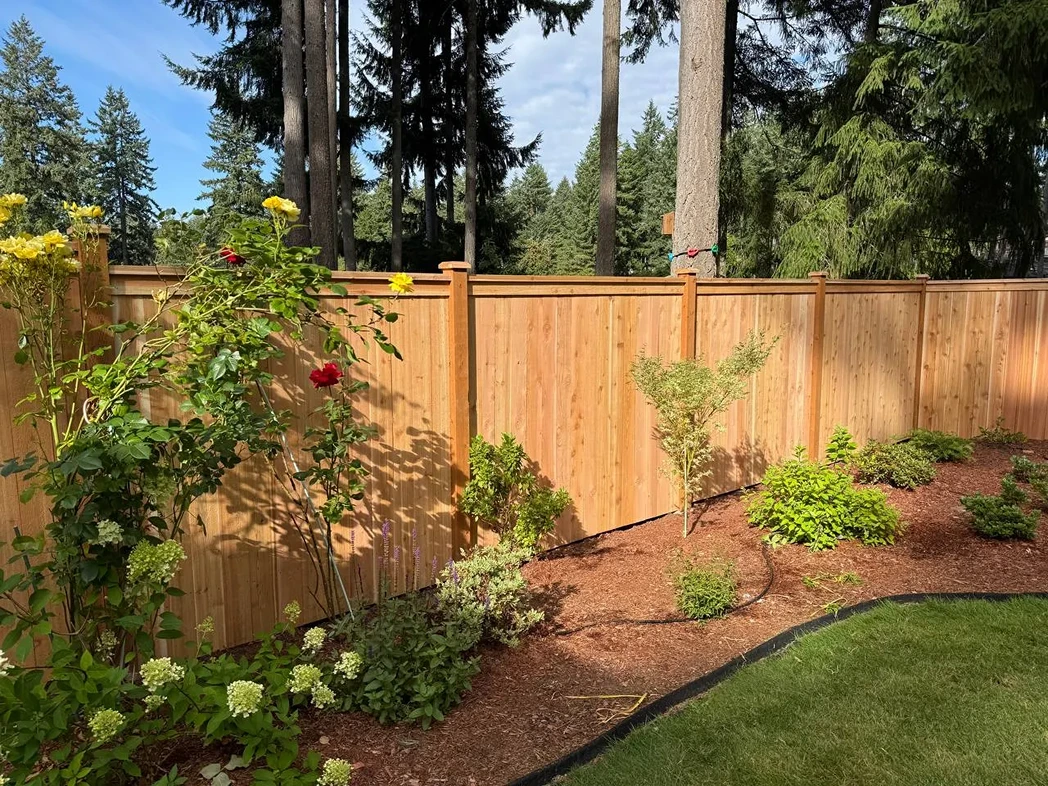
- Privacy: Cedar wins here, which is the one real tradeoff.
That last point matters. This isn't about hog wire beating cedar everywhere, it's about it winning on cost-over-time and views, while cedar still owns full privacy.
It's worth thinking about resale too. In Bellevue's competitive market, the fence quietly tells buyers something:
- A clean, modern fence reads as a maintained property.
- A graying, leaning cedar fence signals deferred upkeep.
- Hog wire with steel or cedar posts holds its look with almost no effort, so you're not re-staining the whole perimeter the week before listing photos.
The Modern Hog Wire Fence Look That's Replacing Cedar in PNW New Builds
Drive through the newer rebuilds in Bridle Trails or the modern boxes going up around the Eastside and you'll see the aesthetic shift. Solid cedar walls are giving way to one of the most popular cedar fence alternatives going up around the Eastside.
Why it's catching on here:
- It keeps your fence line open to greenbelts, yards, and the tree canopy that makes Bellevue, Bellevue.
- Cedar-post-with-wire framing gives that warm-but-modern PNW feel without the fortress look.
- It suits pet containment and yard definition without boxing in a property.
- On view lots, it protects the exact thing the lot was bought for.
For a lot of homeowners choosing hog wire over a solid privacy fence, the open feel is the whole point, not a compromise.
There's a practical side beyond the looks. Open wire panels let light and air move through the yard, which matters on the smaller, tighter lots common in newer Bellevue developments where a tall solid fence makes a backyard feel boxed in. Paired with the right framing, it defines your space and handles pets and kids without turning the yard into a row of wooden walls.
Galvanized vs Dip-Coated Hog Wire: What Lasts Near Lake Washington
Coating is the decision that quietly determines how your fence ages, and around here it's tied directly to water. Properties near Lake Washington, Lake Sammamish, or the Puget Sound side deal with more moisture in the air, and that drives corrosion.
Galvanized: The Workhorse
Galvanized wire mesh is zinc-coated, durable, and budget-friendly. For most inland Bellevue lots, away from direct waterfront, it holds up well and is the practical pick.
Dip-Coated: The Waterfront Upgrade
Vinyl or PVC dip-coated wire adds a sealed layer over the metal, which buys extra corrosion protection and extra strength. If your property sits close to the water or in a damp, tree-shaded pocket that never fully dries out, it's worth the bump.
The simple rule: inland lot, galvanized is fine; waterfront or high-moisture spot, lean dip-coated. A good installer will look at where your property actually sits before quoting either.
Wire thickness, or gauge, matters for longevity as well. Heavier-gauge wire holds up better to:
- A dog leaning on it day after day
- A branch coming down in a windstorm, common on tree-heavy Eastside lots
- General sag over the years
When comparing quotes, ask what gauge and frame the installer uses. A cheaper number sometimes means thinner wire that won't age as well in our climate.
Is a Hog Wire Fence Installed in Bellevue Right for Your Property?
The honest answer is that it fits some yards beautifully and isn't the move for others. A hog wire fence installed Bellevue tends to be the right call when your priorities line up with what it does best.
Strong fits:
- View lots where you don't want to block the scenery
- Sloped yards that suit a clean, paneled line
- Modern or newer-build homes
- Dog and pet containment without a full privacy wall
- Homeowners tired of re-staining cedar every few years
When cedar still wins:
- You need full privacy from close neighbors
- Your HOA specifically mandates solid wood
- You want a sound buffer from a busy road
A quick gut check: if you bought your lot partly for the view or the trees, hog wire usually protects that better than a cedar wall does.
Getting a Hog Wire Fence Through HOA Approval in Bellevue
Plenty of Bellevue homeowners assume an open wire fence will be a hard sell with their HOA. It's often the opposite.
Many Eastside neighborhoods, including parts of Woodridge, Somerset, and Bridle Trails, actually favor open-style fencing because it preserves the sightlines and green, uncrowded feel those communities are built around.
What Approval Boards Usually Want to See
To move your submission along, most boards look for:
- Proposed height and where the fence will sit on the property
- Post material and finish
- Panel style and wire mesh gauge
- A clean spec or drawing, not a vague description
This is another spot where working with an installer helps. A contractor who has been through Eastside HOA submissions can hand you a spec sheet that answers the board's questions before they ask, which is often the difference between a one-meeting approval and weeks of back-and-forth.
The Bottom Line on Hog Wire vs Cedar in Bellevue
The shift from cedar to hog wire across Bellevue isn't really a style fad, it's homeowners running the actual numbers on what a fence costs them over ten years, not just on install day. Factor in the skipped staining, the open views, and how well galvanized or dip-coated wire handles our damp Eastside air, and the case gets pretty practical.
If you're weighing the two for your own yard, the crew at Optima Fence and Deck has put these in across Bellevue and the wider Eastside, and they can walk your property, tell you straight whether galvanized or dip-coated suits your spot, and hand you a real per-foot number instead of a guess. Reach out to us when you're ready to see what your lot actually calls for.
FAQs
How much does a hog wire fence cost to install in Bellevue?
Most framed, professionally installed projects land between $45 and $75 per linear foot. That's higher than the bare-wire prices you'll see quoted nationally, because it covers set posts, concrete footings, and finished labor. Where you fall depends on panel height, steel or wood posts, your yard's slope, and whether an old fence needs removal first.
Is hog wire cheaper than a cedar fence?
Not always on day one, where cedar can look cheaper. But over a decade, hog wire often costs less because you skip the staining, sealing, and board replacement that cedar needs in our wet climate.
Does hog wire fencing rust in the Pacific Northwest?
Quality galvanized wire mesh resists rust well for most inland Bellevue lots. If you're near Lake Washington or another high-moisture spot, dip-coated wire adds an extra protective layer worth considering.
Will a hog wire fence pass my Bellevue HOA's approval?
Often yes. Many Eastside HOAs favor open-style fencing because it keeps neighborhood sightlines open. Submitting a clear spec with height, post finish, and panel style speeds up approval.
How long does a hog wire fence last near Lake Washington?
With the right coating, the metalwork can last well beyond the lifespan of untreated cedar boards. Galvanized works for most lots; dip-coated is the safer bet for waterfront or consistently damp properties.
Is hog wire fencing good for pets and dogs?
Yes, it's a popular pick for pet containment. The wire spacing keeps dogs in while preserving views, though very small breeds may need a tighter gauge at the base.
Can I put a hog wire fence on a sloped Bellevue yard?
Yes. Hog wire panels work well on the sloped lots common in Somerset and Cougar Mountain, though more grade means more labor, which affects the per-foot cost.
What material options are best for hog wire fence posts?
Both wood and metal posts are common. Wood posts offer a natural look but need maintenance, while metal posts give you extra strength and durability with less upkeep.
Do hog wire fences need rails or framing?
Many installs add horizontal rails or a frame at the top and bottom, which keeps the wire mesh tight and the fence looking clean over time. Your installer will spec this based on panel height and span.


.png)







.svg)